
14:36, 06-Mar-2019
Tech It Up: China boosts facial recognition technology
Updated
14:30, 09-Mar-2019
 []
Share







Copied
04:23
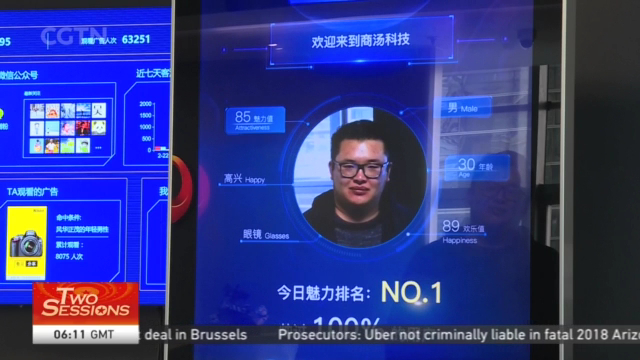
Just over a year ago, China announced an ambitious plan to develop advanced face-recognition technologies by 2020. The country is now well on its way to building the world's most extensive facial recognition database, with innovative new products from both private and public firms. The technology now spans across several sectors, including law enforcement, retail, transportation and medical facilities. Uche Okoronkwo is in Beijing to find out how it works.
Smile for the camera! The phrase has taken on a whole new meaning in China. The nation sits at the forefront of finding amazing ways to put facial recognition technology to use.
At Beijing's busy and crowded train stations, a network of cameras is already doing just that. Facial scanners are being used to verify passenger identities and track them through the city's transport network.
Train operators say it increases their efficiency, by eliminating the need for tickets, streamlining passenger flow and even flagging security threats. Some commuters say it only helps them feel a little more secure on their journey.
COMMUTER "It is more convenient. The lines also move faster now thanks to technology."
COMMUTER "It has greatly cut down wait time. I think the face reader is also connected with the police, so I also feel safer."
This is just one of several applications for facial recognition technology. It is also being used in security and police work, payment portals, financial transactions and even hospitality amongst others. Private China-based tech firms are rushing to invest and build this futuristic, artificial intelligence-powered technology.
China's SenseTime is currently the world's most valuable AI startup, valued at over $4.5 billion US dollars. Walking into their Beijing office, one is greeted by a large screen that analyzes your face and assigns an "attractiveness rating". The firm dabbles in artificial intelligence software that recognizes and analyzes people and places.
Today, SenseTime has contracts with top phone makers, major telecommunications companies, and large retailers.
Technology like this is set to grow even faster in China over the next few years. At the annual 2019 Two Sessions meetings, the government stressed the importance of taking a global lead in AI development by boosting investment in technologies and training more professionals nationwide. UO, CGTN, BJ, China.