
09:45, 13-Aug-2018
HIV/AIDS in South Africa: Government uses multi-layered action plan to reduce infections
Updated
09:17, 16-Aug-2018
 []
[]
Share







Copied
02:06
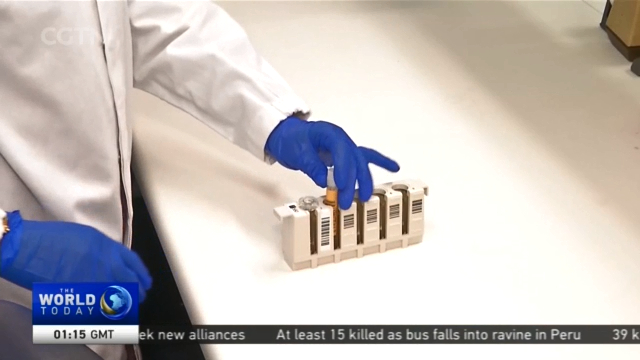
South Africa has the largest HIV/AIDS infection rate in the world, with 7.9 million people living with the virus. The country has worked steadily to manage the disease, but the path towards an effective vaccine has not been an easy one. Our correspondent Angelo Coppola reports.
The fight against HIV Aids is always going to be a challenge. And that's because it's the worst epidemic that South Africa has ever faced.
PROFESSOR HELEN REES REPRODUCTIVE HEALTH & HIV INSTITUTE, UNIVERSITY OF WITWATERSRAND "When you have such a large epidemic, you want to do two things. You want to identify people who are living with the infection, you want to get them on treatment, you want to keep them on treatment for life, and you want to stop infections. So the resource requirement is enormous."
Developing a vaccine to fight the infection is proving to be harder than most experts would have thought. And that's because of the nature of the HIV infection. There is some hope. There's a vaccine that's been used in partially successful clinical trials in Thailand. It's been brought to South Africa.
PROFESSOR HELEN REES REPRODUCTIVE HEALTH & HIV INSTITUTE, UNIVERSITY OF WITWATERSRAND "What we have done is take that vaccine, modified it somewhat, to make it more suited to the epidemic that we see, or the viruses that we see in the African region, and now that's been rolled out as a clinical trial. We don't expect that this is going to be 100% effective vaccine. We know that we are a long way from that."
Meanwhile neutralizing antibodies are also getting a lot of attention in attempts the fight the HIV infection. A series of clinical trials and laboratory investigations have led to the development of antibodies that will hopefully protect people against the infection.
PROFESSOR HELEN REES REPRODUCTIVE HEALTH & HIV INSTITUTE, UNIVERSITY OF WITWATERSRAND "But it has to be given into the vein and that's not something you could give at a population level. But if that's successful what we would then try and do is to continue to improve that technology and get easier and easier formulations so that we would be able to administer those antibodies, if protective, in ways that are compatible with doing it in an everyday program, at a population level."
The fight against the infection is being fought on several fronts. It's going to take a continual and concerted effort to win the battle, and the war. I'm Angelo Coppola for CGTN in Johannesburg, South Africa.