
19:21, 02-May-2019
Nadine Labaki: Lebanese film director talk about 'Capernaum' and more
Updated
19:20, 05-May-2019
 []
[]
Share







Copied
05:32
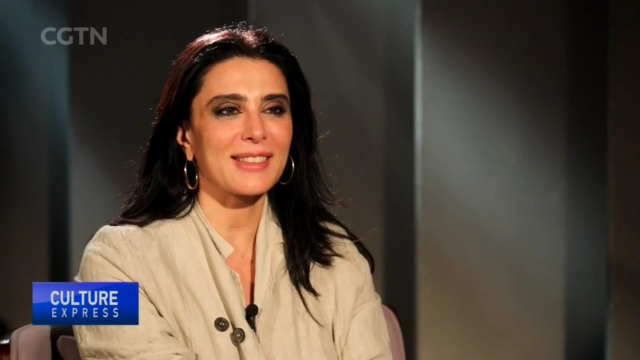
Winning the Jury Prize at the 2018 Cannes Film Festival, Nadine Labaki's 'Capernaum' made history. It also earned a Golden Globe nod for best foreign language motion picture, with the film on its way to marking further milestones. Recently, She came to China with this Lebanese film hitting cinemas across the country. Ji Xiaojun brings you an exclusive interview with Nadine Labaki in Shanghai.
Ji Xiaojun: Welcome back to Shanghai. I understand last year you were here for the film festival.
Nadine Labaki: Yes.
Ji Xiaojun: And just now there was this master class and everyone was just so curious about how you did it with this movie Capernaum?
Nadine Labaki: Capernaum, yes.
Ji Xiaojun: And you remembered all the details so vividly. How come all these feet of details?
Nadine Labaki: You know this film was based on a lot of research. We did like three years of research before writing anything. It was on a daily base that is really going to those places to the most unfortunate, you know, neighborhoods in places in Lebanon, talking to children, talking to their families, talking to the community, going to prisons and detention centers, going even to courts, spending time in courts. I tried as much as I can to understand the problem from every angle.
Ji Xiaojun: Indeed, it is real because, um, the actor, the boy himself is one of so many boys who've been living a life like that. And I have to say he is so good. He's not so good being an actor, he's so good being himself.
Nadine Labaki: So good being himself.
Ji Xiaojun: Exactly, so good being himself and he's so comfortable in front of cameras and that's I guess your, your contribution. You made him feel so natural in front of cameras.
Nadine Labaki: Exactly. It was a very long process. That's why we shot for such a long time. You know we shot for six months. We have over five hundred hours of freshes. The first version of the film was twelve hours. So, so we in order to achieve that we needed to take our time.
Ji Xiaojun: Every shot was good.
Nadine Labaki: Yes, we needed to create this kind of trust relationship and at the end, when you know when we were shooting, they felt every one of them, not only Zain, every one of the actors felt that they were part of the process, they were part of the collaboration, part of the mission, of becoming the voice of those voiceless uh, communities and children.
Ji Xiaojun: Your film is released in China. Congratulations on that, being the first film from Lebanon. And not only that, a Lebanese films, including your own works and now uh, more visible uh, at the international scenes, cinemas and what would you comment on that part? Again, coming back to your role as a director and an actor.
Nadine Labaki: First of all, I'm very proud because for a film, or for my country to be able to just express itself in a different culture and a culture that is so far away. Also, it's not far away because we're all human beings and we all feel the same, and we all I think, but it's a different country. So I'm so proud to be able to bring my country in your beautiful country also in a way, and it's making the mission bigger for me. The more people see the film, the more it will engage us in a conversation, the bigger the debate will be, and the bigger the change will be. I am sure about that because I see it happening. I see it happening in my country and all the places where we go, people have a visceral connection to the film. It's not any connection. People tell me I couldn't move from my seat for ten minutes. I couldn't eat after watching the film. It changed me forever. I want to do something about it. What can I do? It changed my perspective. I don't look the same way at this kid that I see every day, sleeping under the bridge or standing next to my car window. I see him now. I used to look but don't see. Now I see. So there is a change.
Ji Xiaojun: It is happening.
Nadine Labaki: It is happening. I, I truly feel it. Yeah.
Ji Xiaojun: So the story might be happening in Lebanon, but we feel the same. And I would say, uh, our hearts are universal, and that is why the story can be uh, very successful. They can also see in China. We feel the same. Thank you very much again, thanks for your time and all the best wishes. Thank you.
Nadine Labaki: Thank you. Pleasure.