
World
17:21, 01-Feb-2018
Turkey issues arrest warrants for 120 army personnel over Gulen links
 ["other","Middle East"]
Share







Copied
Turkey has issued arrest warrants for 120 suspects from the military, according to state-run Anadolu Agency on Thursday, marking the latest in a long-running government crackdown launched after a failed coup attempt in 2016.
The warrants were issued by the Chief Public Prosecutor’s Office in central Konya province as part of an investigation that started in Konya and expanded to 43 other provinces.
Of the 120 "secret imams," a code name for senior figures in the Gulen movement, 58 were believed to be users of the banned ByLock messaging app, according to Anadolu which said testimonies of previous detainees helped identify them.
ByLock is a homegrown encrypted app, reportedly developed by amateur software engineers. Turkey outlawed it following the attempted putsch, saying followers of the Muslim preacher Fethullah Gulen, whom Ankara accuses of being the architect of the coup, used it to communicate during and after the bloody event.
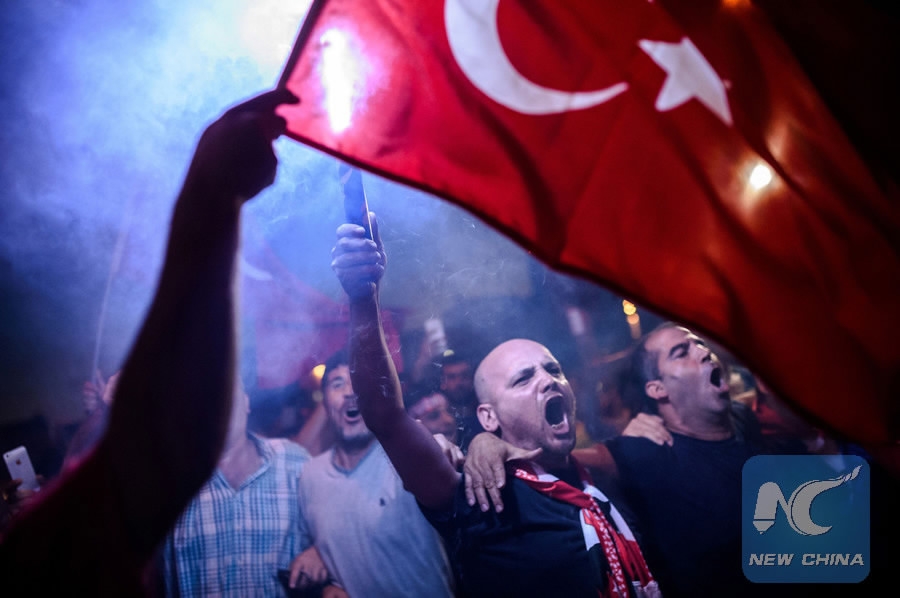
Pro-Erdogan supporters gather for a rally at Taksim square in Istanbul on July 18, 2016 following the failed coup attempt on July 15. /Xinhua Photo
Pro-Erdogan supporters gather for a rally at Taksim square in Istanbul on July 18, 2016 following the failed coup attempt on July 15. /Xinhua Photo
On the night of July 15, 2016, military mutineers commandeered tanks and warplanes to attack the parliament. At least 250 people were killed and more than 2,000 others injured in the course of a few hours before the coup attempt was foiled and order restored.
Gulen, who has lived in self-imposed exile in the United States since 1999, has denied involvement and condemned the coup. Ankara’s attempts to extradite him have been futile so far.
In the aftermath of the coup attempt, a state of emergency was declared and has been in place ever since. The Turkish government also launched a widespread crackdown, with more than 50,000 people jailed pending trial over alleged links to Gulen.
Some 150,000 people have been sacked or suspended from jobs in the civil service and private sector.
Ankara believes the campaign is crucial to rid the state institutions of members of the Gulen movement who it says have infiltrated the judiciary, army and education institutions. But rights groups have expressed concern, saying the crackdown is an attempt by President Recep Tayyip Erdogan to eliminate dissident voices and quash opposition.
(With input from Reuters)