
20:54, 30-Apr-2019
Sudan Unrest: Workers' strike, anti-govt. protests disrupting S. Sudan's oil industry
Updated
20:50, 03-May-2019
 []
[]
Share







Copied
02:09
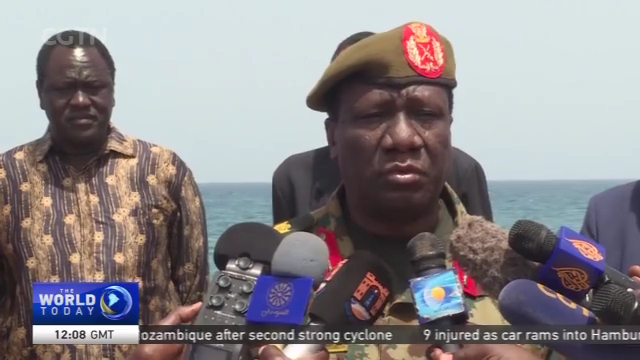
Sudan says its oil exports have been unaffected by the ongoing unrest in the country. The statement comes after South Sudan said its vital oil industry was suffering because of a workers' strike in the Sudanese city of Port Sudan on the Red Sea. CGTN's Patrick Oyet has more.
Sudan and South Sudan both depend on oil revenues to fund large parts of their budgets. South Sudan is a landlocked country. It uses Port Sudan in Sudan to take its oil to international market and the revenue is shared between the two countries.
MAJOR GENERAL Al SHAMADIN SALAH GOVERNOR, RED SEA STATE, SUDAN "The government of Sudan is committed to building a stronger relationship with the government and people of South Sudan, a good relationship between us is beneficial to all our people in the two countries and we believe that the relationship will continue growing."
Experts warn that ongoing instability in Khartoum would negatively affect oil business for both Sudan and South Sudan.
PATRICK OYET PORT SUDAN, SUDAN "South Sudan's government says its oil production is currently 175,000 barrels per day and it's aiming to increase production to about 360,000 barrels a day by the end of this year, more than 98 percent of the country's budget is financed by money from the sale of oil."
Four months of protests in Sudan toppled former president Omar Al Bashir. And for several days now essential chemicals needed for the extraction of oil in South Sudan have not been reaching the country.
EZEKIEL LOL GATKOUTH SOUTH SUDAN'S PETROLEUM MINISTER "We are brothers and sisters, we are actually one community in two countries, this oil belongs to all of us, it belongs to the people of Sudan and South Sudan and we must make sure that it's not interrupted because this is the lifeline of our people."
South Sudan's President Salva Kiir has offered to mediate between the various conflicting groups in Khartoum to ensure a quick and Smooth transition. For now, as protests continue in Sudan, Juba remains concerned about how it can make sure the flow of oil isn't disrupted. Patrick Oyet, CGTN, Port Sudan.