
18:08, 28-Feb-2019
Highlight – Where is China’s hydropower going?

Share






Copied
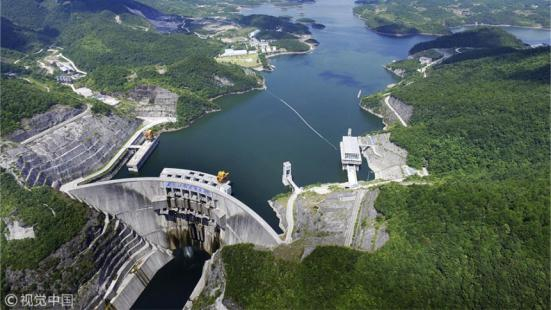
In response to the rapid development of China’s economy and industry, and the resulting pressures of pollution and sustainability, alternative energy development has been accelerating: solar, wind, nuclear and hydropower.
Hydropower is characterized as a clean and renewable energy source which barely emits any greenhouse gases and does not consume water.
In this respect, hydropower could significantly reduce carbon-dioxide emissions, and more effectively respond to climate change.
However, one problem with hydropower lies in its ecological side effects; for example, river dams affect the migration of fish.
Moreover, hydropower stations also cause environmental impact. But because hydropower in China is a significant natural energy source, there is commitment to improve its efficiency and reduce its environmental impact.
What’s the future of the hydropower industry in China? Ma Zhijie, professor in the China Institute of Water Resource and Hydropower Research, shared his views.
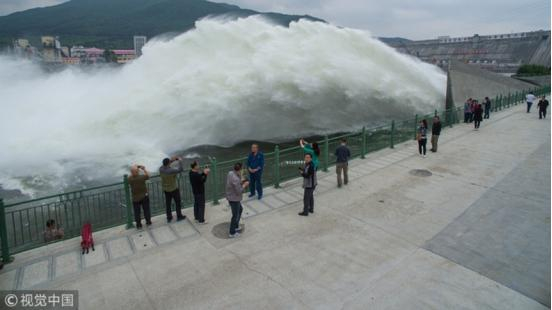
The flood discharge of the Fengman Hydropower Station in Jilin Province, located in Northeastern China. VCG/·Photo
The flood discharge of the Fengman Hydropower Station in Jilin Province, located in Northeastern China. VCG/·Photo
According to Professor Ma, to develop hydropower, China will stress innovation in three aspects.
First, use technology to minimize environmental impact of existing hydropower stations and tackle the root-cause by building new, eco-friendly, kinetic-hydropower stations.
For example, the project called Green Small hydropower focuses more on ecological protection, which could help reduce the consumption of fuelwood and coal.
And it also plays an exemplary role in eco-friendliness, social harmony, standardized governance and economic rationality.
Second, enhance the utilization rate of maritime hydropower. The utility rate of freshwater hydropower has already hit 40% in China.
However, the rate of seawater hydropower remains remarkably low. Raising the utility rate of freshwater would trigger high marginal costs, so going forward, China would like to tap into seawater’s enormous potential.
Third, facilitate synergy among the renewable categories: as each renewable has its strengths and weaknesses, it’s only by catalyzing synergy through innovation can their potential be realized fully.