
Tech & Sci
18:08, 12-Mar-2018
Int'l solar alliance keen on China and women's NGO
 ["other","India"]
Share







Copied
The International Solar Alliance (ISA) is eager to bring China and the women-based NGO Solar Mama on board its grand plan to harness solar energy, but India is being accused of playing the role of a spoilsport.
Its proposal to slap a hefty tariff on imported panels to protect its domestic market has been described by one activist as "catastrophic" for the initiative.
The ISA, the first treaty-based global coalition to emerge after the Paris Climate Summit, is exploring ways to exploit solar energy generation in 121 so-called “sunshine countries.”
India and France had invited China to join the alliance at the Paris Climate Summit. China finally announced plans to enter the ISA at the COP 23 meeting at Bonn last year.
At present, it’s on a list of prospective alliance countries. “We are eager to have China as a member country and learn from its best practices in the solar energy sector,” Upendra Tripathy, interim director general of ISA, told CGTN.
Tripathy pointed out that China's journey in tapping renewable energy, especially solar, will help the alliance in many ways. “Our liaison office is constantly trying to get more member countries included in the alliance,” he added.
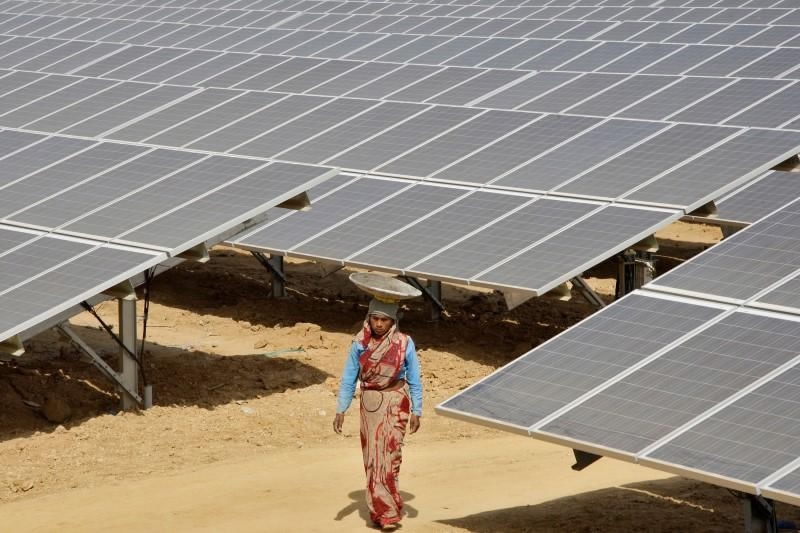
A worker walks through the installed solar modules at the Naini solar power plant in Allahabad March 21, 2012. /Reuters Photo
A worker walks through the installed solar modules at the Naini solar power plant in Allahabad March 21, 2012. /Reuters Photo
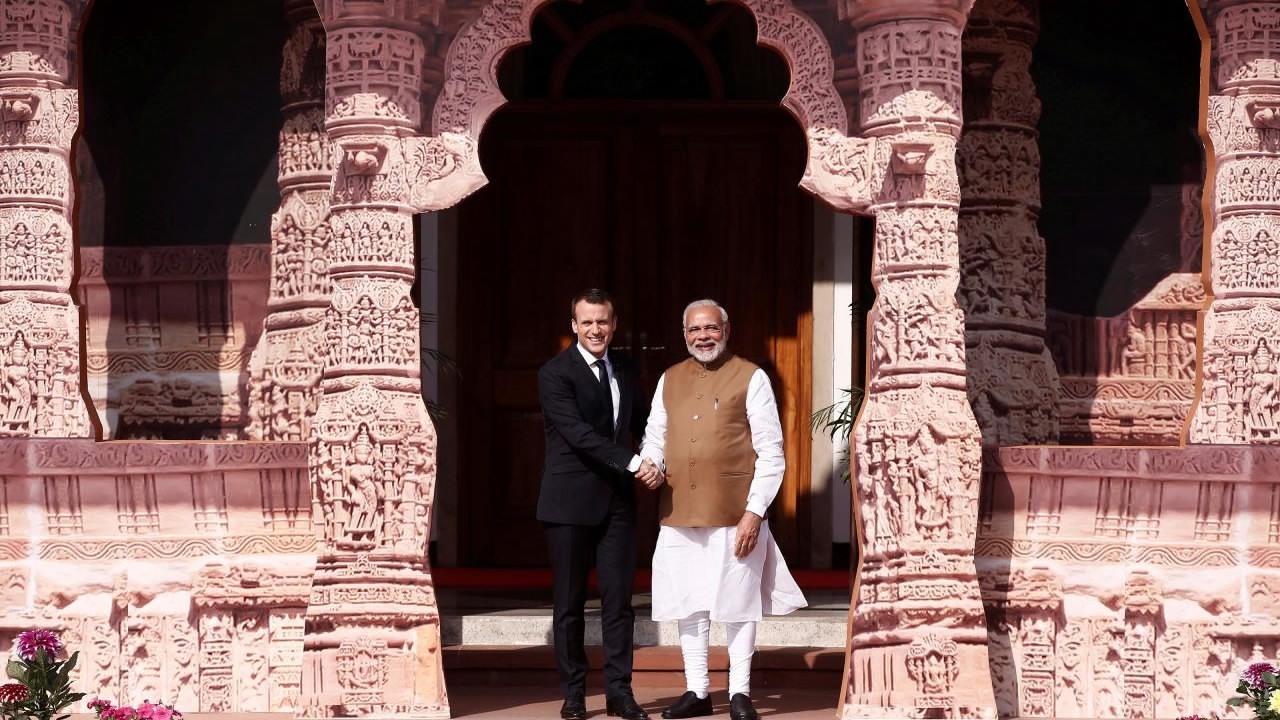
During the inaugural conference of the ISA in New Delhi, co-chaired by Prime Minister Narendra Modi and French President Emmanuel Macron on Sunday, a broad roadmap was discussed to raise one trillion US dollars by 2030 to generate 1,000 GW of solar energy.
The funds would be utilized to satisfy power needs for agricultural and rural areas, solar mini-grids, rooftop installations, and e-mobility.
France, which had already committed 300 million euros (370 million US dollars) to in 2015, pledged another 700 million euros (861.5 million US dollars) to strengthen the alliance’s funding.
“We had allocated 300 million euros ($370 million) for solar projects and this commitment has been met,” Macron said while inaugurating the ISA summit.
The French president and Modi also praised the concept of Solar Mama, an initiative by Rajasthan-based Barefoot College to provide solar panel repair training to poor rural women from developing countries.
The college selects mature unschooled women from backward villages for the project. Lessons and instructions for repairing and installing solar panels are taught in sign languages to overcome literacy and language barriers.
Initially, the college selected rural women from African countries, and after providing them with technical skills, sent them back to their villages. “ISA will act as a catalyst to explore more opportunities to solar mamas,” Tripathi said.
Barefoot College has already initiated similar concept to train elderly rural Chinese women as solar mamas.
“These women from the bottom of the pyramid in developing countries are making renewable energy affordable and also creating livelihood opportunities,” Meagan Fallone, CEO of Barefoot College, told CGTN.
Experts feel India’s leadership role in promoting renewable energy is likely to be hit by the proposed plan to impose up to 70 percent tariff on imported solar panels. According to estimates, more than 80 percent of solar panels imported by India is manufactured in China and Malaysia.
Vinay Rustagi, the head of renewable energy consultancy Bridge to India told CNN that a 70 percent tariff would be "catastrophic."
"Domestic manufacturers are unable to compete with their Chinese competitors because of obsolete technology, sub-scale operations and lack of domestic supply chains," Rustagi said.