
 []
[]
Share







Copied
Chinese bookstore and publishing house Citic Press Corp. has pulled off one of the most successful initial public offerings of the year after listing in Shenzhen on Friday, with its share price soaring by 45 percent since its debut.
The enthusiasm among investors comes amid a makeover for China's traditional book industry, and is all the more surprising after a series of lukewarm IPOs by innovative tech firms over the past year.
Citic Press, a unit under Chinese conglomerate Citic Ltd., launched on the ChiNext index on Friday, with its share price soaring despite coinciding with an overall market slump.

Physical bookstores have grown increasingly popular in recent years. /VCG Photo
The ChiNext Board has fallen by almost two percent since Friday, but Citic Press on Tuesday was again up by its daily limit of 10 percent, repeating Monday's impressive performance.
The company was first established in 1988 and initially focused on publishing, a business which has grown in scale to a value in excess of one billion yuan, according to the Citic Press website.
However, it was not until 2010 that the firm launched its first physical bookstore, under the name Citic Books.
Citic Press currently operates 90 stores across China, 57 of which are located in airports, reflecting how the country's growing air travel and leisure industry has also provided an indirect boost to bookstores.
Beyond publishing and bookstores, Citic Press is also a digital publisher, ranking among China's biggest sources of e-books.
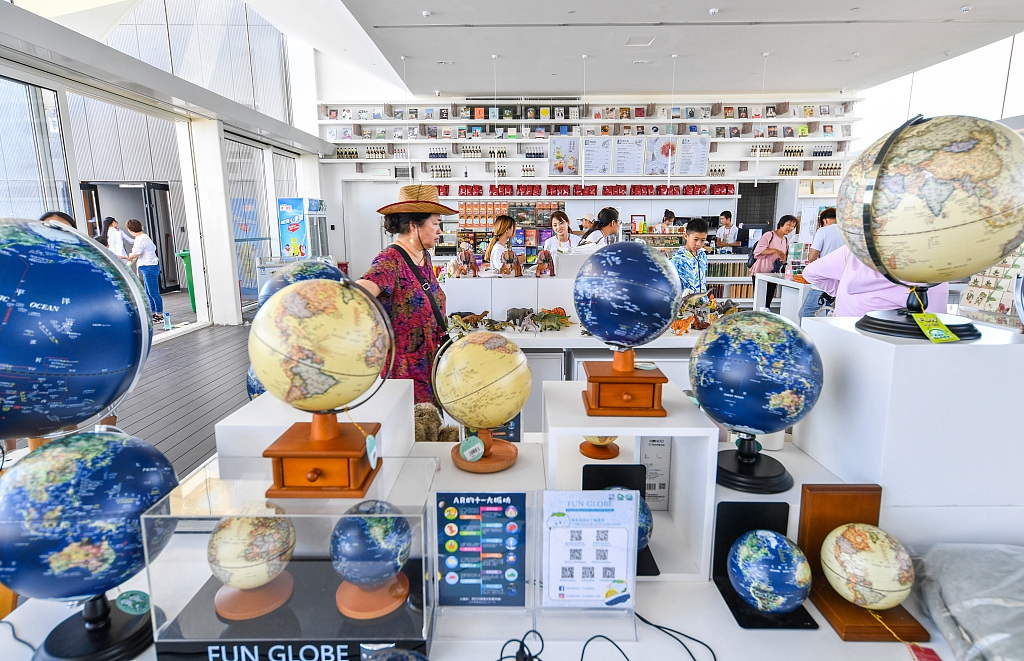
Citic Press bookstores offer a diversified range of products beyond just paperbacks. /VCG Photo
A report by the Chinese Books and Periodicals Distribution Association found that the country had 225,000 bookstores by the end of 2018, an increase of 4.3 percent from 2017.
China's bookstores brought in total revenue of 370.4 billion yuan (54.1 billion U.S. dollars) last year according to the report, with the industry receiving official support in recent years.
Following the publication in 2016 of a national guideline on supporting the bookstore industry, Beijing last year announced it would provide 50 million yuan (7.2 million U.S. dollars) worth of subsidies to bookshops in the city, with the municipal authority either investing money in the stores or using it to reduce rental costs.
While physical bookstores are rebounding in popularity among younger people, the publishing industry has of course been transformed by digital technology in recent years.
In 2017, Tencent's China Literature listed in Hong Kong, raising 1.1 billion U.S. dollars. The platform is China's biggest e-book store, offering 112 million online literary works by the end of last year and encouraging a new generation of young self-publishing writers.