
 []
[]
Share







Copied
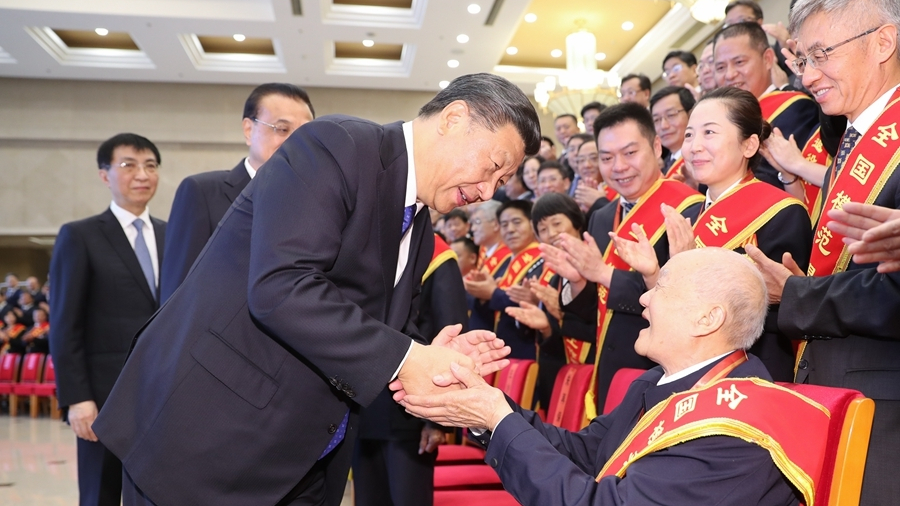
Chinese President Xi Jinping met veterans' representatives in Beijing Friday and called for efforts to break new ground in the work concerning veterans' affairs.
Xi, also general secretary of the Communist Party of China Central Committee and chairman of the Central Military Commission, extended his sincere greetings to the veterans and asked them not to forget their original intention and mission.
Xi came to the conference building of Jingxi Hotel around noon, where he shook hands with the representatives and greeted and talked with 94-year-old war hero Zhang Fuqing, who was honored a "role model of our times" in June.
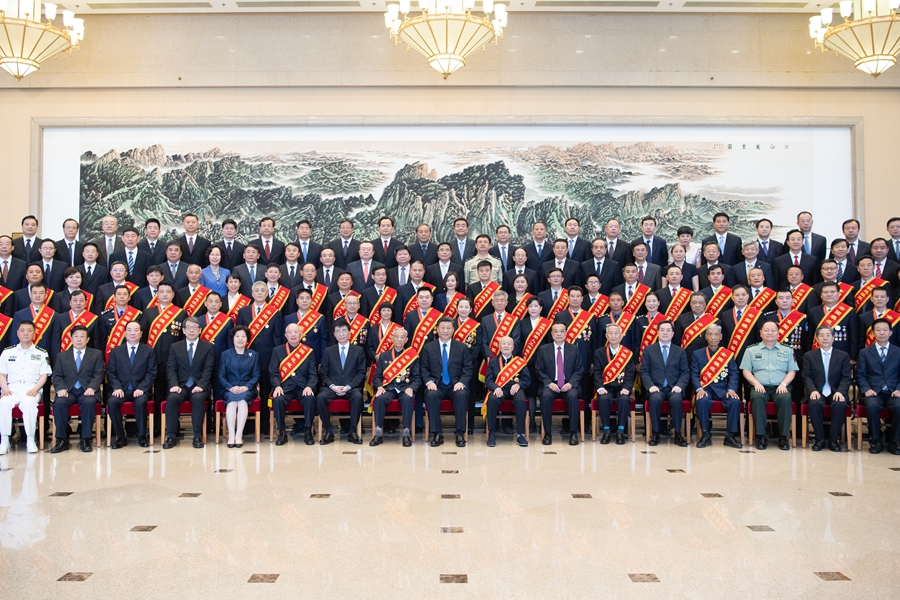
Chinese President Xi Jinping (C) takes a group photo with veterans' representatives in Beijing, July 26, 2019. /Xinhua Photo
Chinese Vice Premier Sun Chunlan attended a national conference on the work of veterans' affairs on the same day.
During the meeting, she highlighted the importance of reform and innovation and the improvement of policies and regulations in veterans' work.
She called for more efforts in job placement, preferential treatment, rights and interests' protection and service management of veterans.
Sun also urged the relevant authorities to effectively protect the work and life of veterans and encourage them to contribute to the reform development and social stability.
The conference honored 401 national model veterans, 91 national model veteran work units, and 76 national model veteran work individuals.
In the process of deepening the reform of the CPC and governmental institutions, China's Ministry of Veterans Affairs was set up last March. Through a series of preferential measures, the support system for veterans is progressing at provincial, prefectural, county, town and township (sub-district), and village (community) levels.
Substantial steps have been taken to enhance the government’s efforts to support the military and their families and to strengthen the military’s support to the government and the people, said China's national defense white paper released on Wednesday.