- Home
- China
- World
- Europe
- Politics
- Business
- Opinions
- Tech & Sci
- Culture
- Sports
- Travel
- Nature
- Picture
- Video
- Live
- TV
- Specials


Share







Copied
Resisting strict lockdown methods and achieving "herd immunity" to stop the coronavirus, a controversial strategy discarded by the UK due to concerns of a high fatality rate, has been touted in Sweden and India.
Sweden's chief epidemiologist said on Tuesday that "herd immunity" could be reached in its capital Stockholm in a few weeks.
When the country's neighbors closed their borders, school, bars, restaurants and factories, Johan Carlson, the head of Swedish Public Health Agency, didn't tell people to stay indoors.
"People should go out, exercise, get fresh air. It's good for their physical and mental health," said Carlson.
For the past month, life in Sweden has remained largely the same, just quieter. People have been advised to avoid non-essential travel and the restaurants, bars, cafes and nightclubs have been offering seated table service only, with gatherings of over 50 people banned. Yet school for under 16-year-olds have remained open.
The strategy — aimed at allowing some exposure to the virus in order to build immunity among the general population while protecting high-risk groups like the elderly — has been controversial. Some health experts argued it is a risky move.
Dr. Anders Tegnell, chief epidemiologist at Sweden's Public Health Agency said, "In major parts of Sweden, around Stockholm, we have reached a plateau (in new cases) and we're already seeing the effect of herd immunity and in a few weeks' time we'll see even more of the effects of that. And in the rest of the country, the situation is stable."

People chat and drink in Stockholm, Sweden, on April 8, 2020. /AP
The idea of "herd immunity" among a population, usually achieved through vaccination, is when a large proportion of the population gets infected by one virus and so the community at large is deemed immune to it.
Tegnell said sampling and modeling data indicated that 20 percent of Stockholm's population is already immune to the virus, and that "in a few weeks' time we might reach herd immunity and we believe that is why we're seeing a slow decline in cases, in spite of sampling (testing for the coronavirus) more and more."
Without a vaccine for the coronavirus, scientists are looking at whether exposure to and recovery from coronavirus can lead to long-term immunity. But there have been some re-infection cases of COVID-19 reported in China, Japan and South Korea.
One research team published their work on the U.S. Centers for Disease Control and Prevention website, estimating that it takes 82 percent of the population to get infected before herd immunity is reached.
"My view is there are a number of questions about whether it can work," said Marc Lipsitch, a professor of epidemiology at Harvard University's T.H. Chan School of Public Health. "The main questions being how much immunity do we need in the population, and how much immunity does each person get as a result of infection."
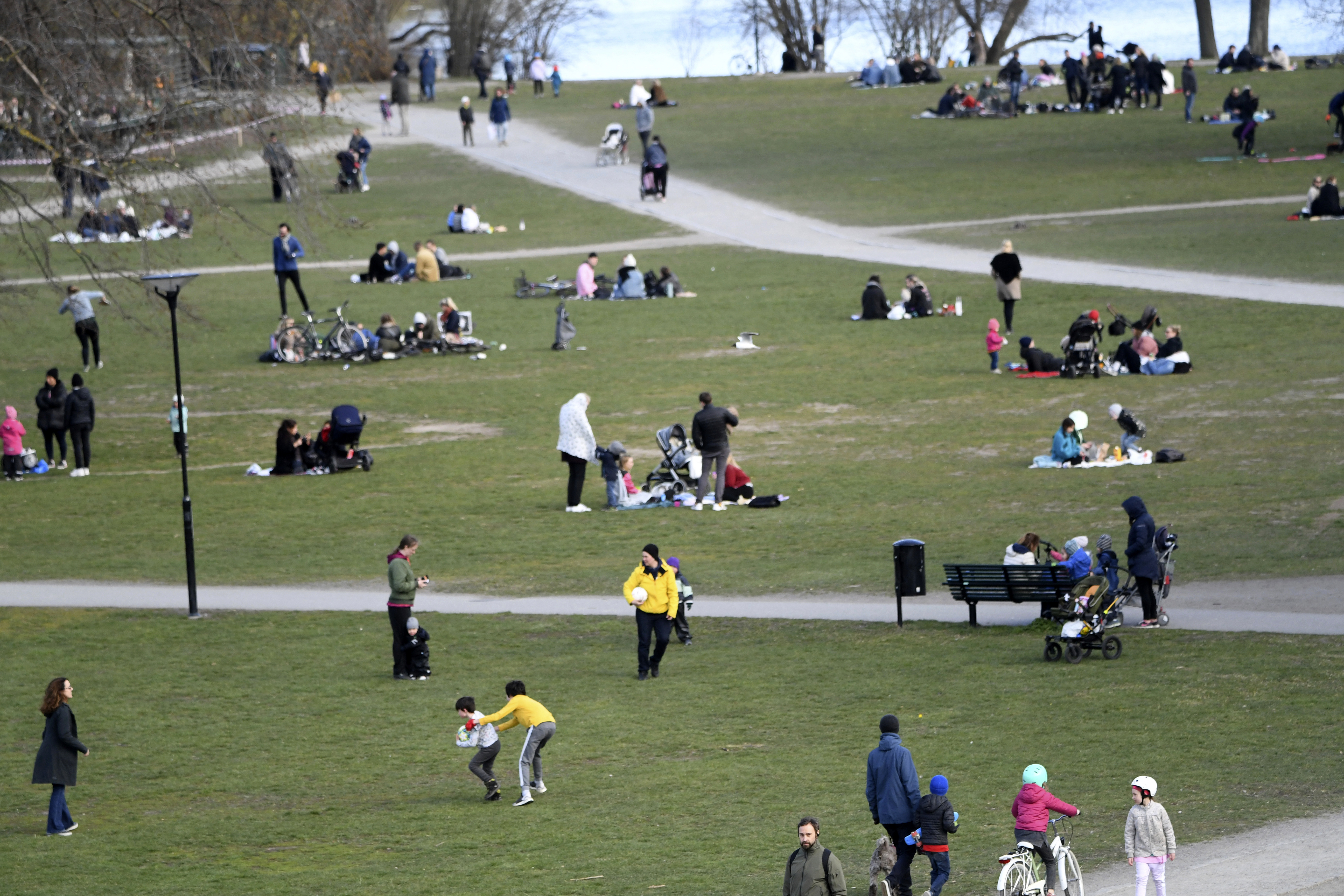
People visit the Raslambshovsparken Park in Stockholm, Sweden, on April 18, 2020. /AP
Tegnell said he was "fairly confident" in the strategy his agency had pursued, but cautioned the early lift of the existing restrictions to curb the coronavirus pandemic. Swedish Prime Minister Stefan Lofven also warned that the outbreak is far from over.
"Don't think for a second that we have got through this now," Lofven said on Wednesday during a press conference.
The major part of Sweden's 15,322 confirmed cases are in Stockholm and its surrounding areas, with few cases in the rest of the country.
The infection rate is about the same in Sweden as in its neighboring countries Denmark and Finland. But Sweden's 1,937 deaths is far higher in number and proportionally to Denmark's 370 and Finland's 141.
Tegnell attributed the high mortality rate to the "introduction (of the virus) in elderly care homes."
"The death toll is very closely related to elderly care homes. More than half of the people that have died have lived in elderly care homes." Tegnell said, adding that he and the Public Health Agency are "still very concerned about the elderly."
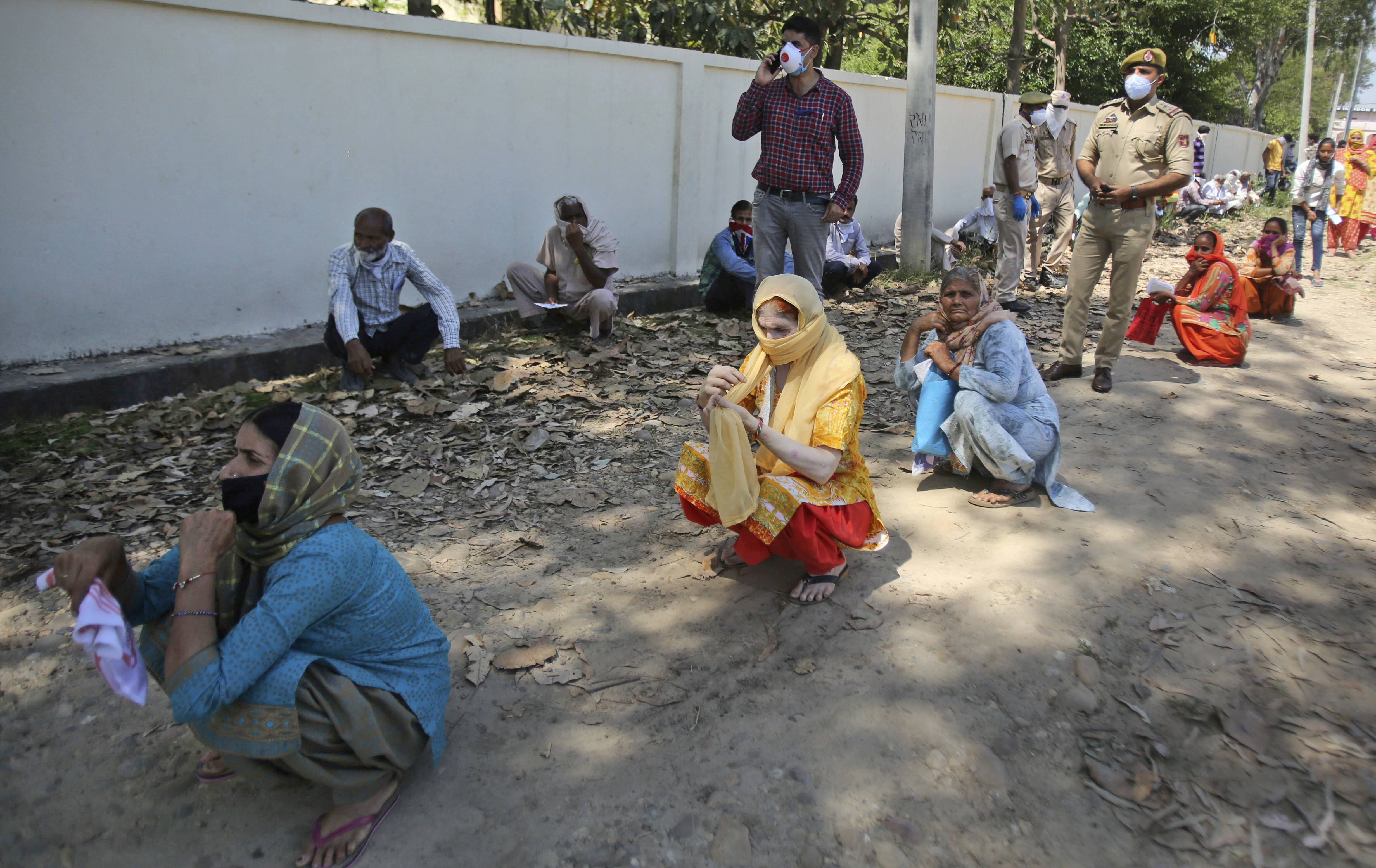
Indians squat as they wait outside a bank to withdraw money during lockdown on the outskirts of Jammu, India, on April 22, 2020. /AP
Another country with much higher population density than Sweden is also thinking about adopting the same strategy.
India has been identified as a place suitable for this strategy, by a team of researchers at Princeton University and the Center for Disease Dynamics, Economics and Policy, a public health advocacy group based in New Delhi and Washington, given that 93.5 percent of the population is younger than 65, which means lower risk of being hospitalized and dead.
India declared the national lockdown on March 25, and has caused a lot of chaos and struggle for the large number of disadvantaged population in this country.
"No country can afford a prolonged period of lockdowns, and least of all a country like India," said Jayaprakash Muliyil, a prominent Indian epidemiologist. "You may be able to reach a point of herd immunity without infection really catching up with the elderly. And when the herd immunity reaches a sufficient number the outbreak will stop, and the elderly are also safe."
However, there are still concerns raised that whether it's possible to wall off the higher-risk portion of the population in densely packed India, where multiple generations commonly live under one roof.
"I think eventually all countries will follow this Indian model," Ramanan Laxminarayan, the director of the CDDEP and a Princeton researcher said. "Because otherwise we are going to be in lockdown on and off all the way through until June of next year."