- Home
- China
- World
- Europe
- Politics
- Business
- Opinions
- Tech & Sci
- Culture
- Sports
- Travel
- Nature
- Picture
- Video
- Live
- TV
- Specials


Share







Copied
Editor's note: CGTN's First Voice provides instant commentary on breaking stories. The daily column clarifies emerging issues and better defines the news agenda, offering a Chinese perspective on the latest global events.
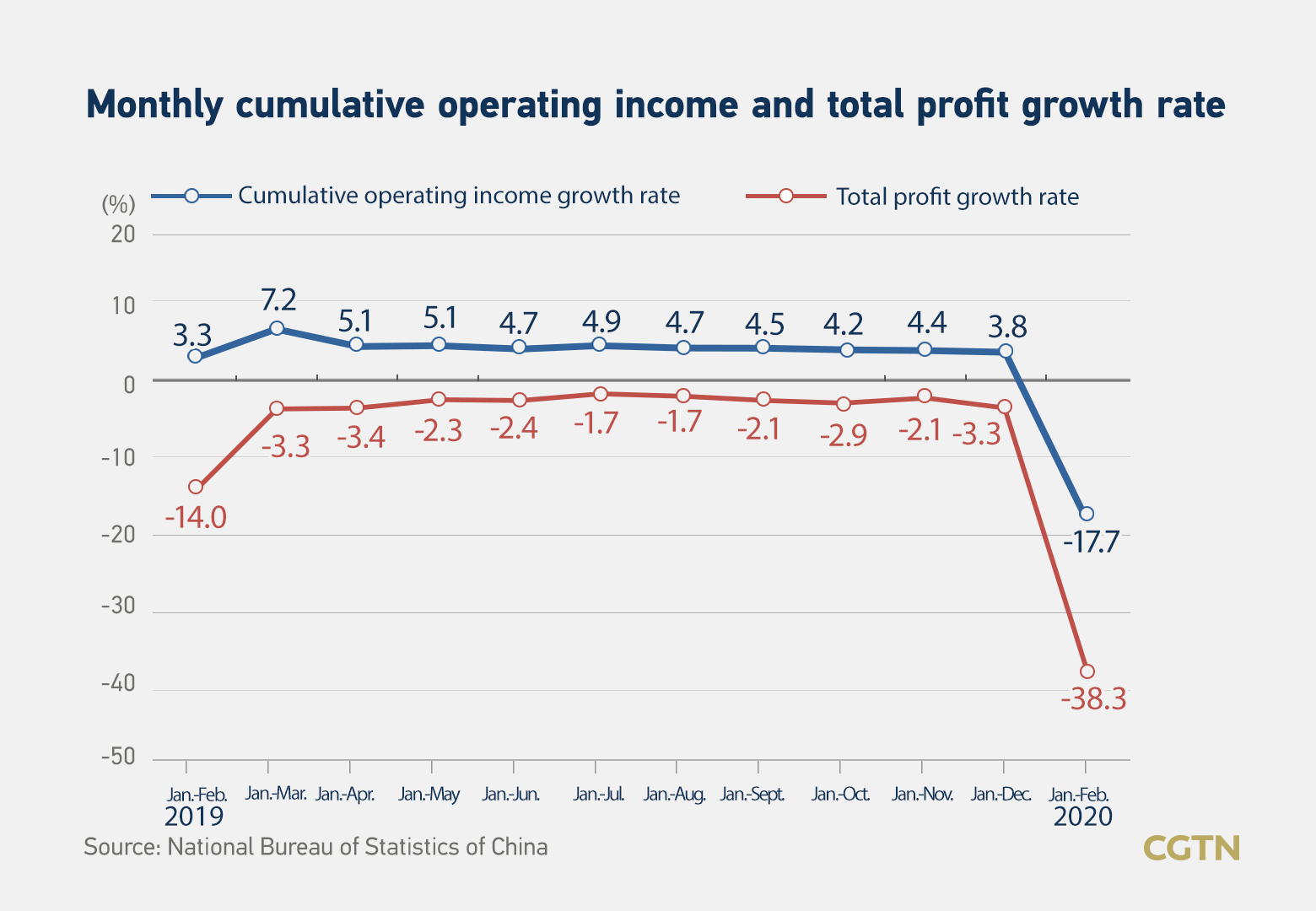
COVID-19 has been wreaking economic havoc around the world. As the first country hit by the coronavirus, China was the first to bear the brunt of economic challenges from the pandemic, with the country's first quarter GDP dropping by 6.8 percent. However, strong measures introduced in the country to contain the outbreak since late January has made sure that it was offered a path to gradually restore its economy after the epidemic was quickly put under control. Since the second quarter, Chinese economy has been slowly recovering.
The country's latest customs data is consistent with this trend, which shows that June has become the first month in the year where both of the country's exports and imports increased compared to last year. Although in the first half of 2020, both its exports and imports dipped by 3.3 percent and three percent respectively from a year ago, the drop slowed down in June.
This is clearly an encouraging development, commented Ni Yueju, a researcher on international trade from Chinese Academy of Social Sciences, who also believed that the country's trade should continue to improve in the second half of 2020, provided there were no further "Black Swan" events.
The same optimism is shared by Cheng Dawei, a professor at the School of Economics at Renmin University of China, who pointed out that not only has China's trade been recovering, the country's other economic activities have also been accelerating, all of which indicate that its economy is going back on track. For example, she said in June, China's national power generation reached a daily average of 20.861 billion kwh, an increase of 7.4 percent year on year.
Moreover, to put this into a wider context, most countries' economic recovery have all been trailing behind China's. For example, Japan's exports dropped by 28.3 percent from a year ago in May, recording its slowest growth since September 2009. India's May Index of industrial Production (IIP) contracted by 34.7 percent compared to a year ago. And according to the IMF's June report on world economic outlook for 2020, China is likely to be the only country that registers a positive GDP growth in 2020 while all other economies contract.
That said, there are still risks lurking in China's economic future. In terms of trade, despite the June improvement, concerns remain. Huo Jianguo, former president of the Chinese Academy of International Trade and Economic Cooperation (CAITEC) noted that while China's customs data stabilized in the second quarter, the scope of improvement had been limited. Most importantly, the slow recovery of the European and American markets will continue to be a source of concern and add uncertainty to China's trade performance in the coming months.
America and the EU's trade with China claim a significant portion of the country's total external trade, accounting for approximately 16 percent and 13 percent respectively. How quick their economies recover will therefore have a direct and sizeable impact on the Chinese economy, Huo said.
Moreover, the shadow of the U.S. tariffs on Chinese products are still very much present and formidable. In the first half of 2020, China's trade with the U.S. dropped by 6.6 percent compared to a year ago. Although COVID-19 played a part, this is also consistent with the trend of China-U.S. trade, which has been going downward in the past three years.
All these factors that will negatively affect China's trade need to be taken care of, Huo stressed. Although exports, which used to be one of the main drivers of the Chinese economy, has now figured less prominently in China's GDP compared to a decade ago, it is still a significant part of the Chinese economy that provides 180 million jobs, both directly and indirectly. Therefore, the government needs to make sure it remains in good shape.
As private companies contribute to more than 50 percent of the Chinese exports, Huo suggested the government shore up its support for these enterprises through financial assistance, including offering credit support, policies of rent reduction and customs duty exemptions.
Moreover, one notable development with the latest trade data was that ASEAN countries have become China's largest trading partner in the first two quarters of 2020. This is partly due to that fact that the region has been less impacted by the pandemic compared to Western countries and that the implementation of the ASEAN-China FTA Amendments to Ease Market Access since August 2019 has greatly facilitated trade between the two sides, according to Huo. Both him and Cheng believe that China needs to capitalize on the opportunity and invest more in forging stronger and more reliable economic ties with the ASEAN, such as upgrading the quality and the structure of goods and services exports to the region, which will help China better cushion future economic shocks.
China's slow regaining of its economic strength offers ample reasons for optimism and celebration; however, its guard should not be let down as the storm is not completely over yet. The country still needs well-devised policies and nationwide unity as well as international cooperation to get through this major crisis.
Scriptwriter: Xu Sicong
(If you want to contribute and have specific expertise, please contact us at opinions@cgtn.com.)