- Home
- China
- World
- Asia-Pacific
- Americas
- Europe
- Middle-East and Africa
- Politics
- Business
- Opinions
- Tech & Sci
- Culture
- Sports
- Travel
- Nature
- Picture
- Video
- Live
- TV
- Specials
- Learn Chinese


Share







Copied
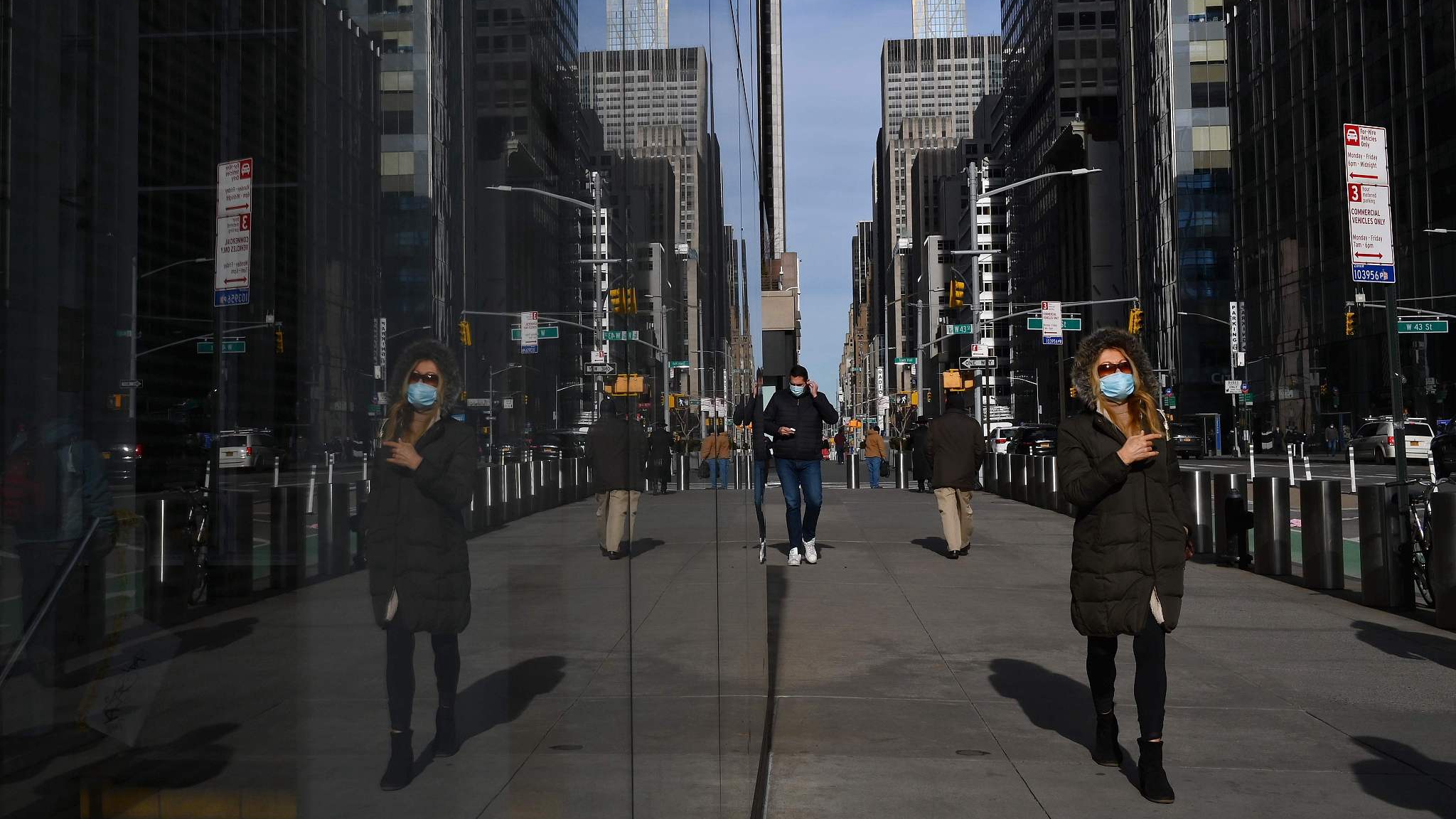
People walk through the midtown area of Manhattan on January 25, 2021, New York City, U.S. /CFP
The U.S. reported its first confirmed coronavirus case on January 20, 2020. However, there is growing evidence that suggests the virus emerged and was circulating in the country earlier than that.
Studies suggest earlier coronavirus infections in the U.S.
A study published on June 15, 2021 by the U.S. National Institutes of Health (NIH) was the latest and largest (in scale) to suggest that the novel coronavirus popped up in the U.S. as early as December 2019 with transmission in multiple states including Illinois, Massachusetts, Mississippi, Pennsylvania, and Wisconsin.
Scientists at the NIH found antibodies to the coronavirus, known as SARS-CoV-2, in nine blood samples out of more than 24,000 people who gave blood between January 2 and March 18, 2020.
A person's immune system develops antibodies when exposed to a pathogen like a virus to fight it off. Their presence suggests exposure to a virus. Antibodies usually take about 14 days to develop.
"There were probably very rare and sporadic cases here earlier than we were aware of. But it was not widespread and didn't become widespread until late February," Natalie Thornburg, principal investigator of the Centers for Disease Control and Prevention (CDC)'s respiratory virus immunology team, told AP after the study was published.

Screenshot of the news release of the study from the website of the U.S. National Institutes of Health.
A separate CDC-led study suggested that there were isolated coronavirus infections in nine states (California, Connecticut, Iowa, Massachusetts, Michigan, Oregon, Rhode Island, Washington, and Wisconsin) in the country as early as mid-December 2019.
In the study published in the journal Clinical Infectious Diseases on November 30, 2020, CDC researchers tested blood samples from 7,389 routine blood donations collected by the American Red Cross from December 13, 2019 to January 17, 2020 for antibodies. The blood tests found SARS-CoV-2 antibodies in 106 of 7,389 blood donors, which suggested they had been exposed to the virus.
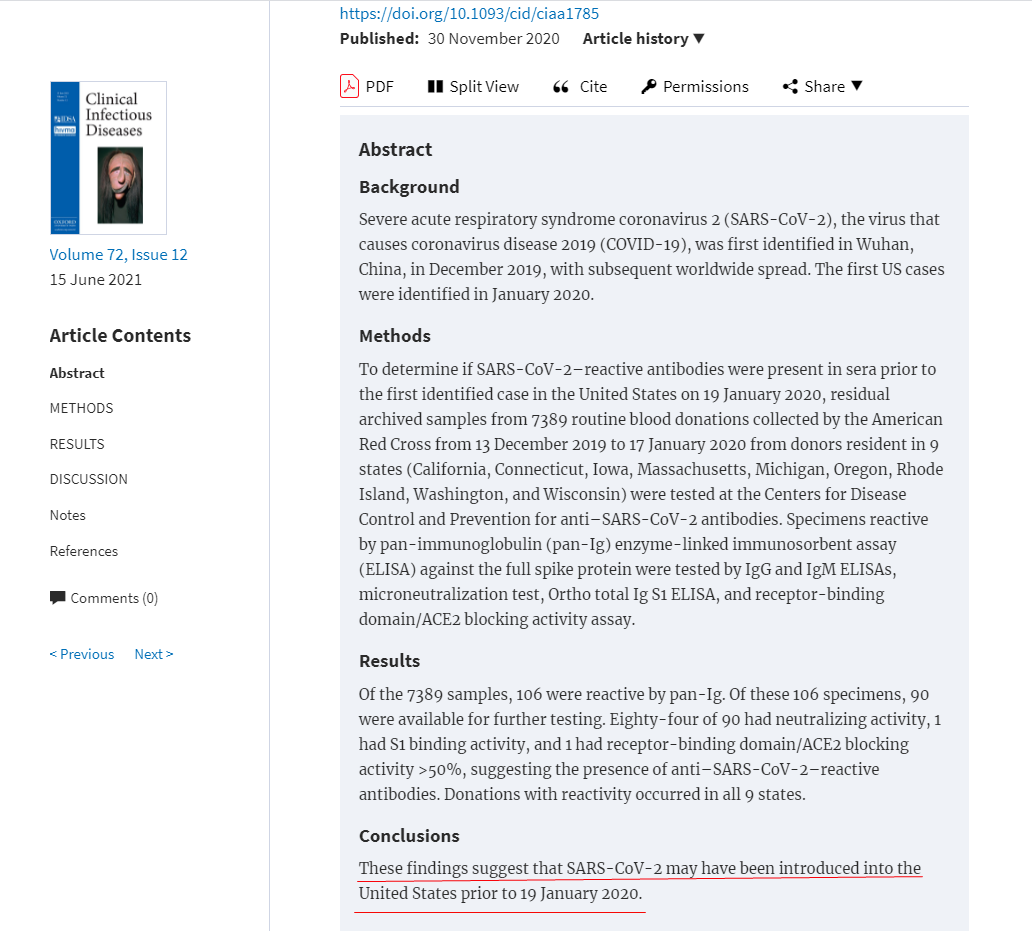
Screenshot of the study from the website of Clinical Infectious Diseases.
Respiratory diseases similar to COVID-19 in the U.S.
As early as March 2020, Robert Redfield, the director of the CDC, publicly acknowledged that some COVID-19 deaths had been misdiagnosed as flu-related in the U.S., according to CNN.
Redfield made the remarks when responding to a question at a hearing about whether people in the U.S. dying of what appears to be influenza could in fact be infected with the coronavirus.
"Some cases have actually been diagnosed that way in the United States today," Redfield said.
According to multiple reports by U.S. media including CNN and NBC, in July 2019, a nursing home in Virginia had an "outbreak of respiratory disease" with symptoms highly similar to those of COVID-19, which left two people dead and 18 hospitalized.
Local health department said 54 of the 263 residents at Greenspring Retirement Community, located in Springfield, became ill with respiratory symptoms ranging from a cough to pneumonia from June 30 to early July 2019.
On October 3, 2019, the CDC reported 18 deaths in 15 U.S. states from a severe lung disease of unknown cause. The cumulative number of confirmed or suspected infections reached 1,080. The disease, known as "white lung disease" because of the whitening of the lungs on radiographs (also seen in the case of COVID-19), was thought to be related to the use of e-cigarettes.
