
World
10:05, 14-May-2019
Chinese foreign minister: U.S. and DPRK should work on realistic, specific denuclearization roadmap
Updated
20:18, 14-May-2019
 ["china"]
Share







Copied
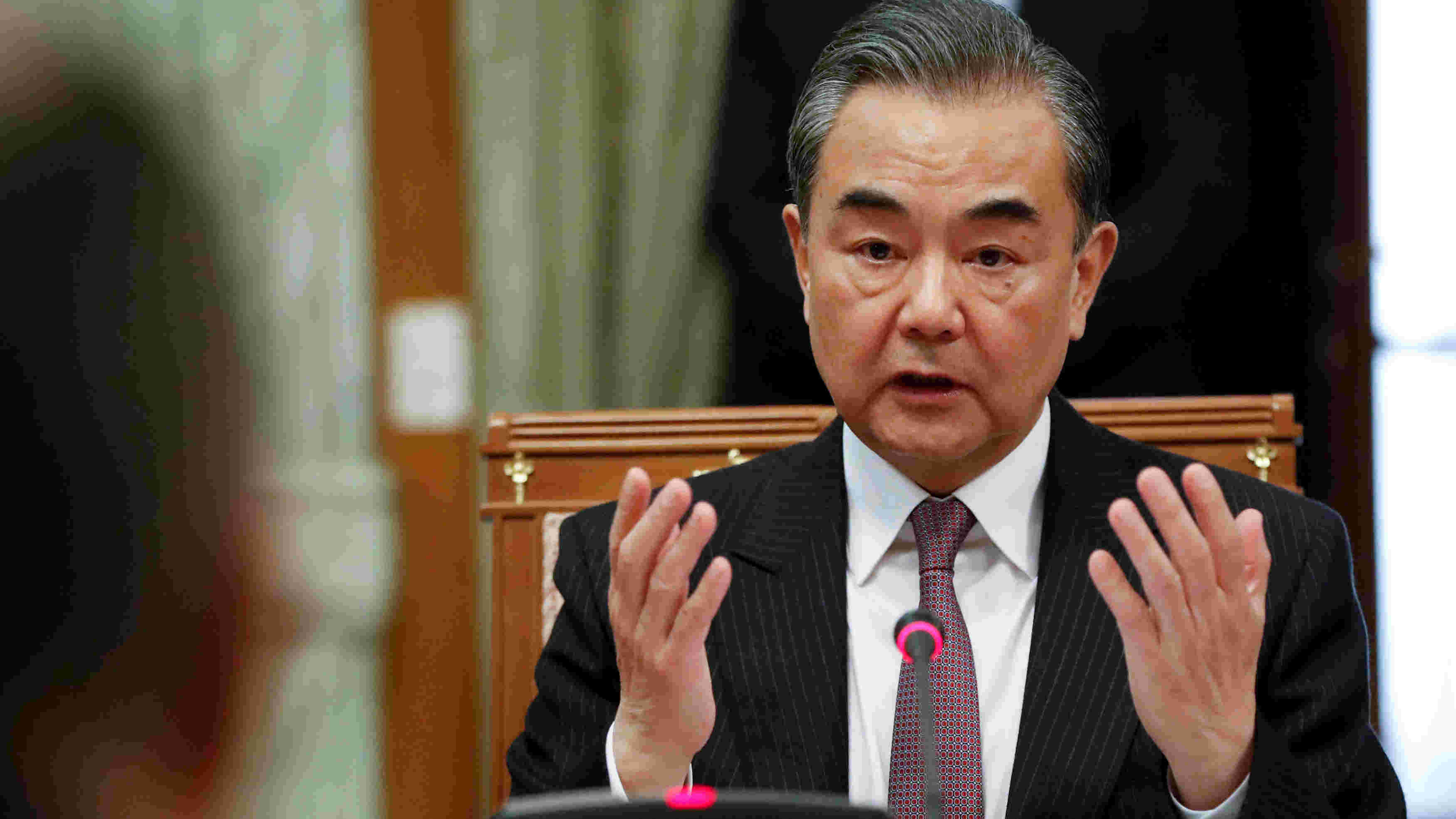
Chinese Foreign Minister and State Councilor Wang Yi said on Monday it was still possible to resolve the DPRK nuclear issue through international dialogue, urging both Washington and Pyongyang to make specific denuclearization steps and to seek for common ground.
The process of resolving the denuclearization had become stuck and there had been an increase in uncertainty since the last summit between the leaders of the United States and the Democratic People's Republic of Korea in Hanoi in February, Wang told reporters at a joint press conference with his Russian counterpart Sergei Lavrov in Sochi.
It came only days after the DPRK conducted two short-range missile tests this month. It fired two short-range missiles on May 9, its second such test in less than a week.
Wang said: "We have seen that the DPRK side is still upholding the basic goal of achieving the denuclearization of the Korean Peninsula, and the U.S. side has not yet abandoned its basic thinking of resolving the issue through dialogue."
"This is to say that the resolution for the peninsula nuclear issue has not come off the tracks, and remains within the framework for a political resolution."
The reason for the stalemate is that both parties have yet to find a feasible, realistic road map for a resolution, Wang added.
Both China and Russia support the resolution of making realistic specific steps to denuclearization, Wang said, calling on both the U.S. and the DPRK seeking for common ground.
China 'has no interest' in joining U.S.-Russia nuclear deal
05:38
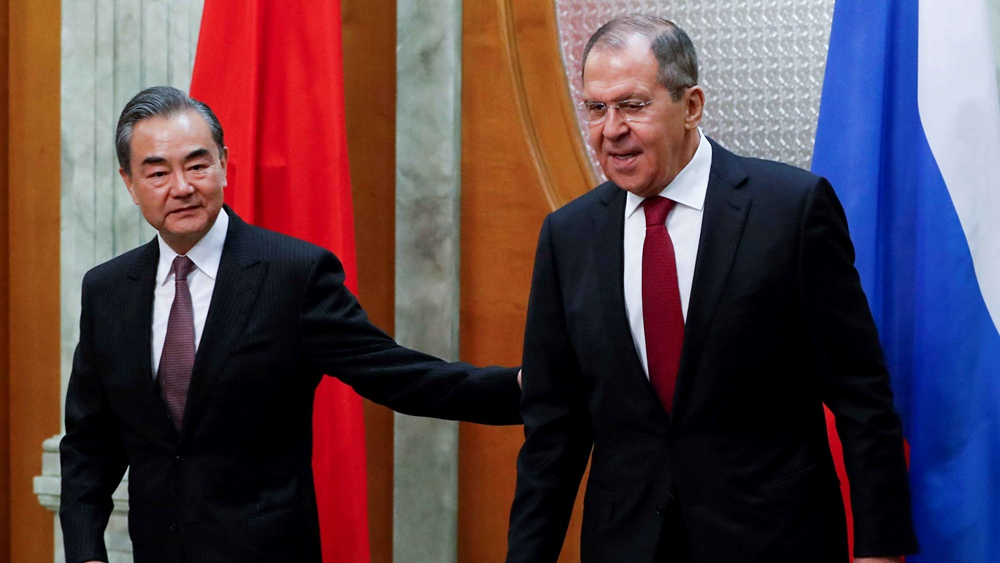
Speaking on the U.S.-Russia nuclear arms control treaty, Wang reiterated China only keeps its arsenal of nuclear weapons at a "minimal level to ensure the defense policies" and that Beijing has no interests in being part of a treaty with Russia and the U.S.
The Trump administration has accused Russia of breaching the Intermediate-range Nuclear Forces (INF) Treaty and threatened to pull out from the deal.
On May 3, Trump spoke with his Russian counterpart Vladimir Putin by telephone, and said they discussed the possibility of a new accord limiting nuclear arms that could eventually include China in what would be a major deal between the globe's top three atomic powers.
The 2011 New START treaty, the only U.S.-Russia arms control pact limiting deployed strategic nuclear weapons, expires in February 2021 but can be extended for five years if both sides agree. Without the pact, it could be harder to gauge each other's intentions, arms control advocates say.
Trump has called the New START treaty concluded by his predecessor, Barack Obama, a “bad deal” and “one-sided”.
Wang said China has no interests in joining the U.S.-Russia nuclear deal, and that China upholds a defensive national defense policy.
He also said China, Russia and the U.S. are permanent members of the UN Security Council and among the most influential countries, and the trio should maintain cooperation and avoid suspicion and misunderstanding.
The China-Russia relationship, in particular, has set an example for the international community in this regard, Wang added. "We are ready to settle differences and strengthen cooperation with other countries including the United States on the basis of mutual respect, so as to strive for more peace, security and stability for the world."
Read more: