
Opinions
12:55, 30-May-2018
Opinion: Why is US-China trade tangle always in flux?
 ["north america"]
Share







Copied
Editor’s note: The author is a journalist for CGTN Opinion. The article reflects her views, and not necessarily those of CGTN.
Since Donald Trump engaged in a trade provocation against China early this year, the two heavy hitters in the world economy have traded barbs in attempts to maintain their own interests.
Just before US Commerce Secretary Wilbur Ross comes to Beijing for the third round of negotiations, Trump made a stunning move on Tuesday by reviving tariffs on 50 billion US dollars’ worth of Chinese imports and setting new restrictions on Chinese investment in US hi-tech industries.
The announcement came barely over a week after US Treasury Secretary Steven Mnuchin said the trade war was put “on hold” after the Washington parley, which resulted in a framework agreement.
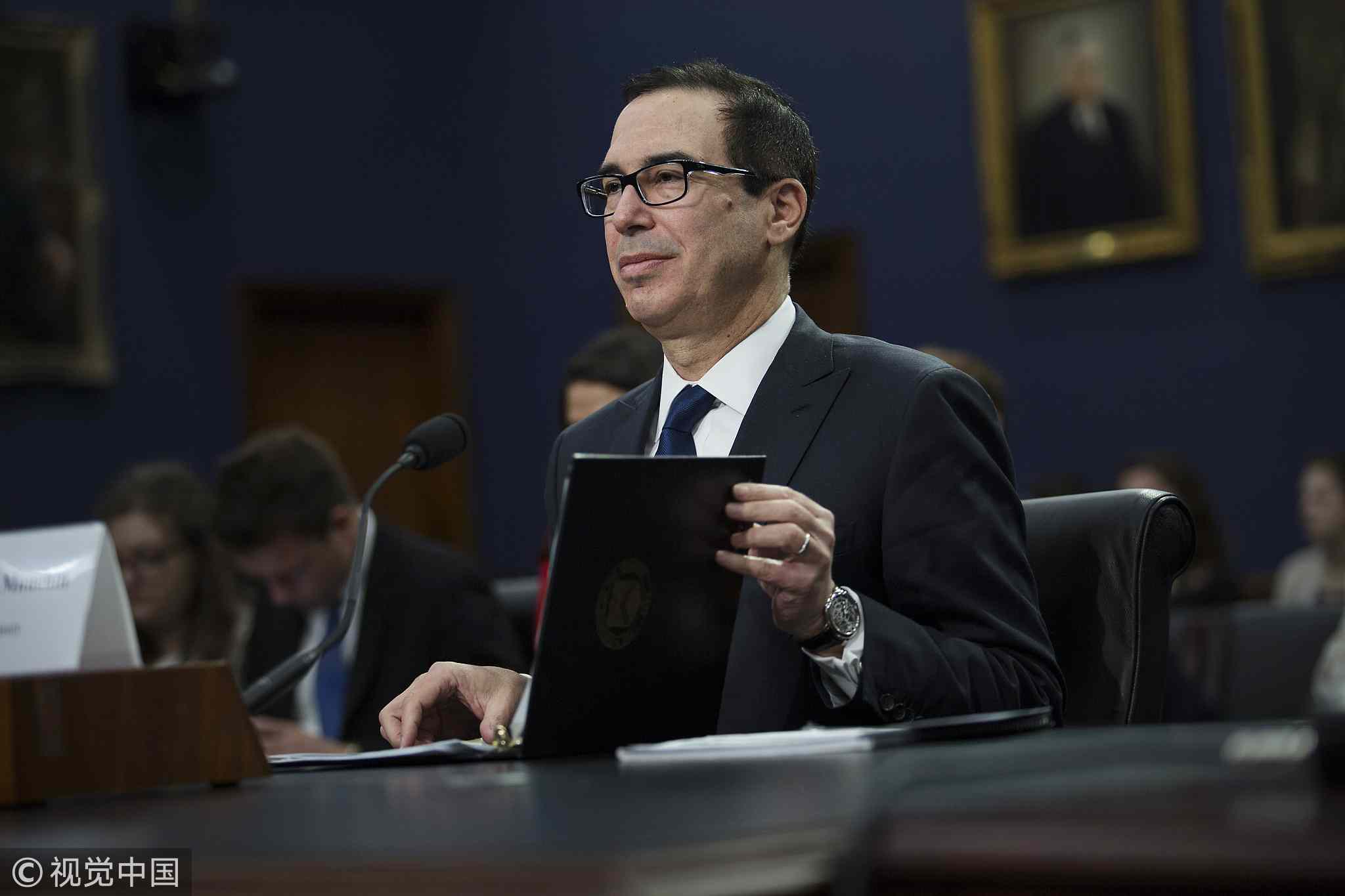
US Treasury Secretary Steven Mnuchin listens during a House Appropriations Subcommittee hearing on the fiscal year 2019 budget in Washington, DC, on March 6, 2018. /VCG Photo
US Treasury Secretary Steven Mnuchin listens during a House Appropriations Subcommittee hearing on the fiscal year 2019 budget in Washington, DC, on March 6, 2018. /VCG Photo
In this game of on-again, off-again, Trump has destroyed the credibility of the United States as a major, responsible world power. His frequent use of heavy-handed penalties is gradually eroding the country’s once-coveted investment climate and national credit.
The mercurial president exhibited his lack of credibility in his heyday as a real-estate developer during the construction of the Taj Mahal casino. After taking out loans to build his vision of opulence in Atlantic City, he could not generate enough revenue to pay those who actually built it. Contractors, as a result, could not pay their workers, and Trump did not apologize for it. Not keeping to his word has characterized some of his grandest business dealings, so it's no surprise that he has flip-flopped on the latest agreement with China to lift tech sanctions.
Sadly, he has brought such behavior all the way to his presidency, making enemies of Washington’s economic partners and baffling its traditional allies. In the bitter trade wrangle with Beijing, he has given the fullest display to this trait.
A less noticeable but more instrumental factor behind the president’s turnaround may be the enormous pressure coming from the US Congress. On May 22, “The National Defense Authorization Act for Fiscal Year 2019” passed the House of Representatives on an overwhelming 351-66 vote, in a backlash against Trump’s softening tone on China’s telecom giant ZTE.
The White House statement on Tuesday was welcomed by leading Democratic and Republican senators, according to a report from The Washington Post.
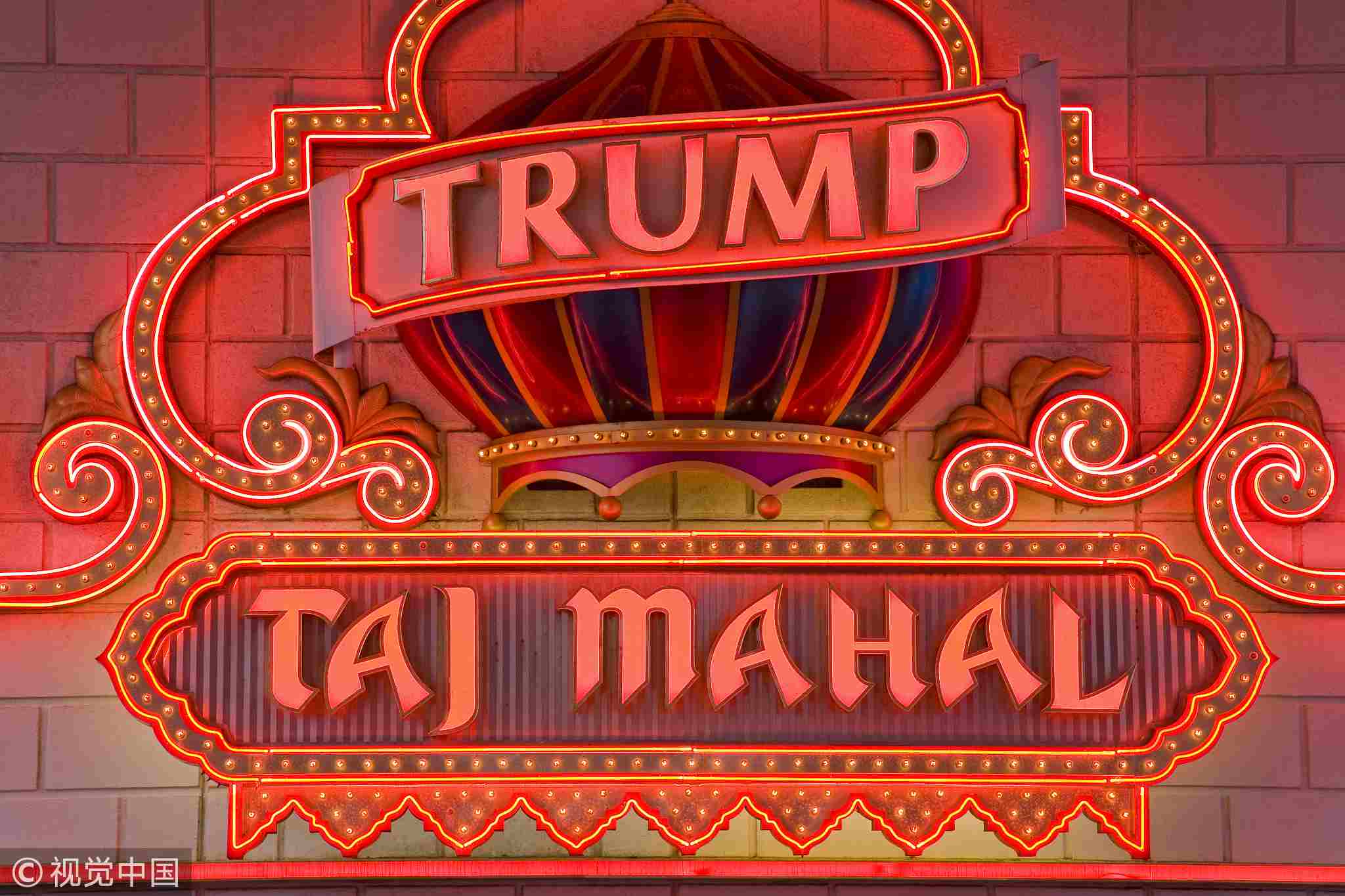
Exterior of Taj Mahal casino in Atlantic City in the US state of New Jersey /VCG Photo
Exterior of Taj Mahal casino in Atlantic City in the US state of New Jersey /VCG Photo
In actuality, an increasing number of members in Congress and the White House have started embracing a tougher stance on China, a rising power which they believe is on the way to challenging American primacy.
Last December, the Trump administration, comprising several vocal China hawks, described the country as a “revisionist” power in the new National Security Strategy. The 2018 National Defense Strategy released this January, the first of its kind since 2014, stated that “retaining the US strategic competitive edge relative to China and Russia is viewed a higher priority than countering violent extremist organizations.”
Earlier this year, the Eurasia Group, a New York-based political risk consultancy, published a report in which it states "China’s political model, despite its domestic challenges, is now perceived as stronger than it has ever been." More recently, Congress held an open hearing themed “China’s Worldwide Military Expansion,” reiterating a “robust, multidimensional” approach toward Beijing.
Amid pervasive anti-China sentiments, Washington has taken Beijing as its strategic rival in global dominance. The trade row is just one that has figured prominently among the slew of conflicts Washington is ready to wage.
Not only the American elite, which spans the country’s political spectrum, is voicing animosity toward China, but also the general public from different social strata.

Pedestrians walk along Wall Street near the New York Stock Exchange in New York, on May 29, 2018. /VCG Photo
Pedestrians walk along Wall Street near the New York Stock Exchange in New York, on May 29, 2018. /VCG Photo
“The American public has largely soured on China in recent years,” according to a Pew Research survey in 2017. It also noted that negative views of China had risen 26 percentage points between 2006 to 2016.
The wider dismay over China’s phenomenal success and the US’ waning influence may stem from a deep-rooted conception that it was the United States that brought China into the international order, but China has prospered under a starkly different path of development to threaten its dominance.
And the frame of mind that Beijing is torpedoing the US-established trading system has led to current trade tensions.
Nonetheless, Trump may again change course. Don’t forget the mighty Wall Street, whose interests are becoming divergent from those of the White House. Now the Dow Jones Industrial Average has tumbled nearly 400 points amid the renewed fears over a full-blown trade war and also the political turmoil unfolding in Italy.
Any behavior that risks derailing trade perches atop Wall Street’s list of concerns. We’ll wait and see whether the White House can control Wall Street, or the other way around.
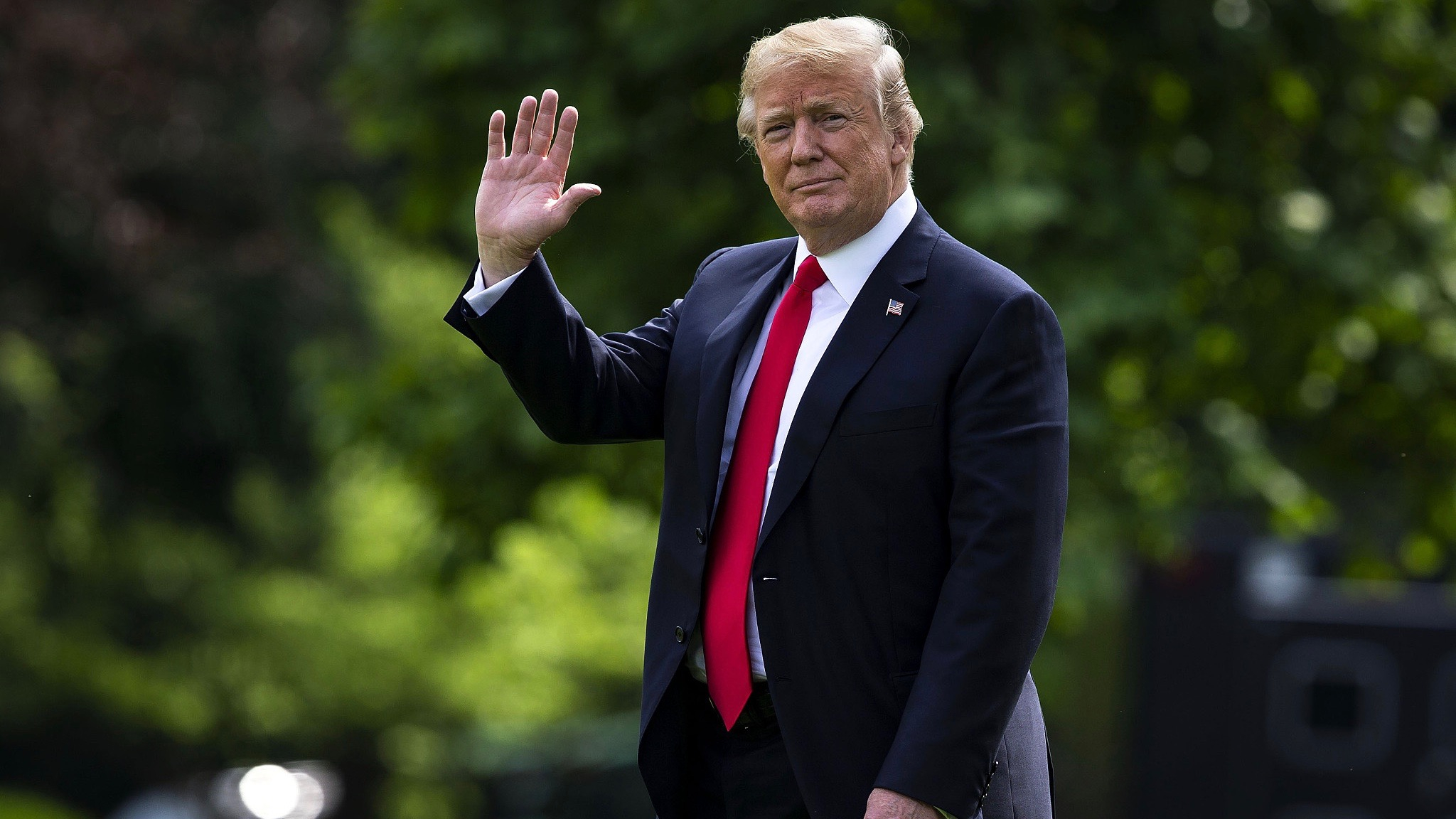
(Cover Photo: US President Donald Trump waves to members of the media while walking to board Marine One on the South Lawn of the White House in Washington, DC, on May 29, 2018. /VCG Photo)