
Asia Pacific
15:41, 22-Mar-2019
DPRK withdraws from joint liaison office in Kaesong
Updated
18:50, 22-Mar-2019
 ["china"]
Share







Copied
00:32
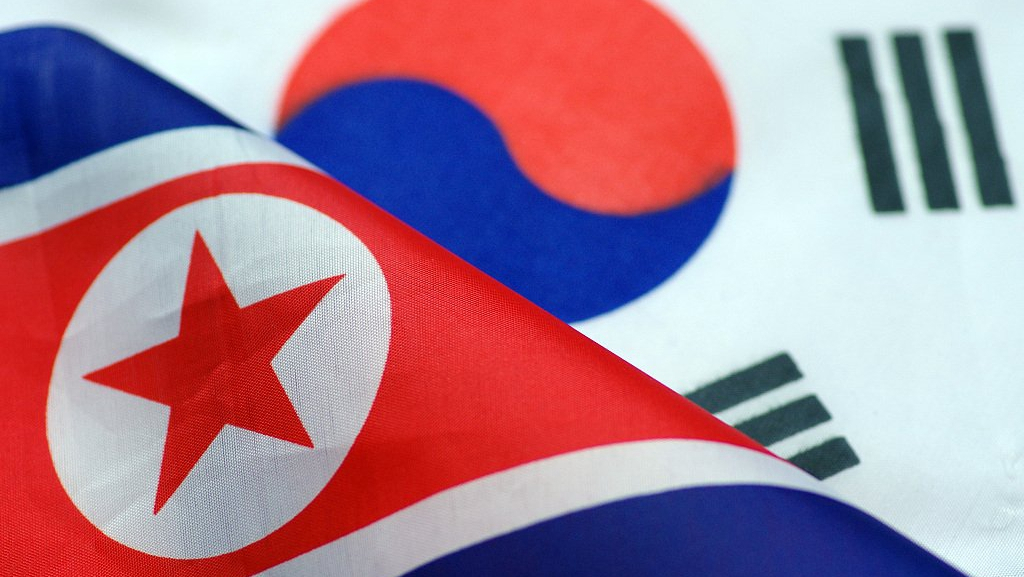
The Democratic People's Republic of Korea (DPRK) withdrew from the joint liaison office with Republic of Korea (ROK) in the border town of Kaesong, Seoul's unification ministry said Friday.
The liaison office was established last September to better foster cross-border exchanges while easing tensions, following by an agreement reached by ROK President Moon Jae-in and DPRK leader Kim Jong Un during their first summit in April in the truce village of Panmunjom.
Read more:
The move came after the second Hanoi summit between Kim and U.S. President Donald Trump, which ended earlier with no agreement signed.
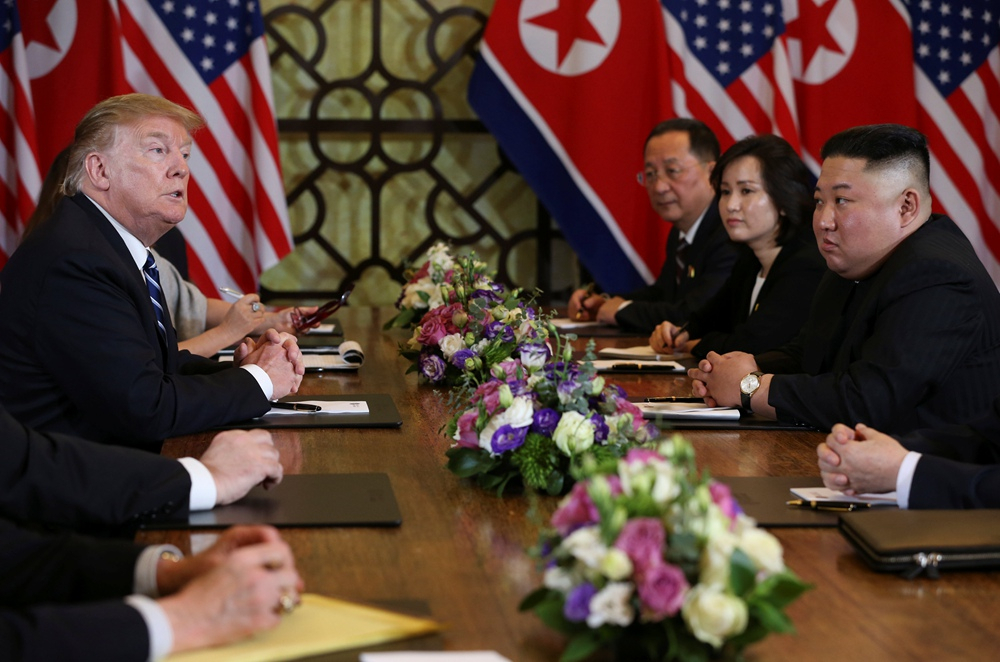
DPRK leader Kim Jong Un (R1) listens as U.S. President Donald Trump (L1) speaks during the extended bilateral meeting during their summit in Hanoi, Vietnam, February 28, 2019. /Reuters Photo
DPRK leader Kim Jong Un (R1) listens as U.S. President Donald Trump (L1) speaks during the extended bilateral meeting during their summit in Hanoi, Vietnam, February 28, 2019. /Reuters Photo
The unification ministry said in a statement that the DPRK side notified ROK on Friday morning of its decision to pull out of the Kaesong liaison office according to instructions from the superior authorities.
All of the DPRK officials, who had stayed in Kaesong for the round-the-clock communications with their ROK counterparts, withdrew from the office.
The DPRK allowed ROK officials to stay and work in the Kaesong liaison office. The Seoul officials planned to work in Kaesong over the weekend.
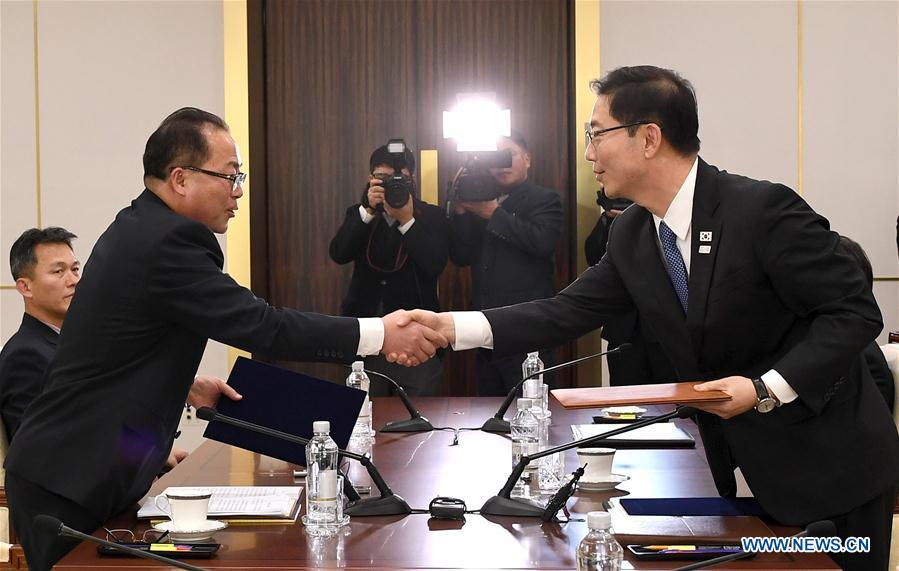
Chun Hae-sung (R, front), ROK's vice unification minister, shakes hands with Jon Jong Su (L, front), DPRK's vice chairman of the Committee for the Peaceful Reunification of the Fatherland of the DPRK, Peace House, Panmunjom, January 17, 2018. /VCG Photo
Chun Hae-sung (R, front), ROK's vice unification minister, shakes hands with Jon Jong Su (L, front), DPRK's vice chairman of the Committee for the Peaceful Reunification of the Fatherland of the DPRK, Peace House, Panmunjom, January 17, 2018. /VCG Photo
The Seoul ministry said the DPRK's withdrawal decision was regrettable, expressing the hope that the DPRK side would rapidly return to the office and normally operate it as agreed upon by the two sides.
ROK vice unification minister Chun Hae-sung told an emergency press briefing that it came to get difficult to make detailed discussions on the video reunions of Korean families, separated by the 1950-53 Korean War.
Seoul had prepared to consult with the DPRK on the video reunions and the exchange of video messages between the separated families as agreed upon by Moon and Kim during their third summit in Pyongyang last September.
The ROK recently won a sanctions waiver from the UN Security Council to send necessary equipment to the DPRK for the video reunion event.
The families of the DPRK and the ROK have been banned from meeting and contacting their relatives on the other side of the Korean Peninsula since the Korean War ended with armistice in 1953.
(With input from Xinhua)