
Opinions
20:21, 27-Apr-2018
Opinion: Will Xi and Modi make history in Wuhan?
 ["china","other","India"]
Share







Copied
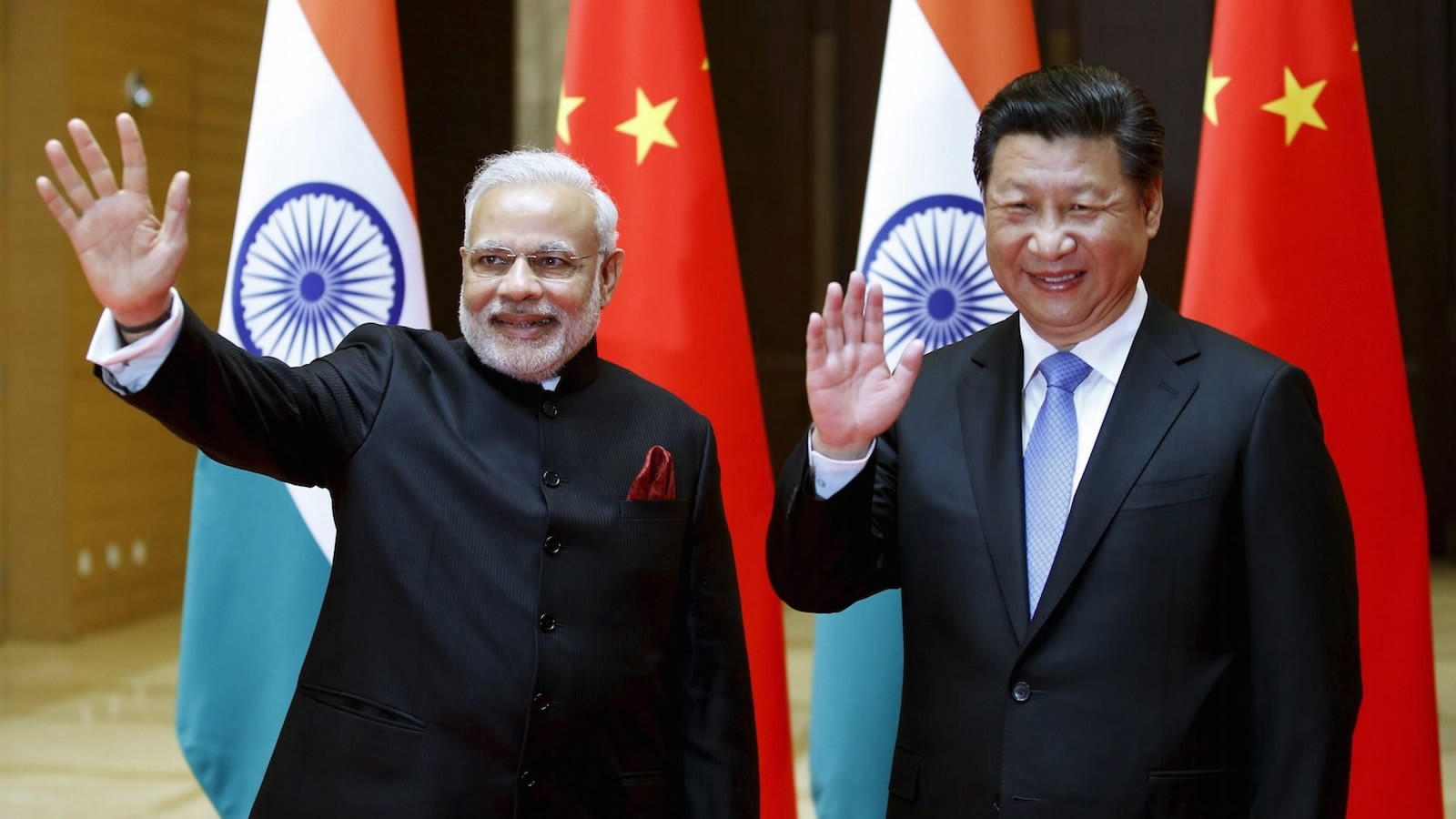
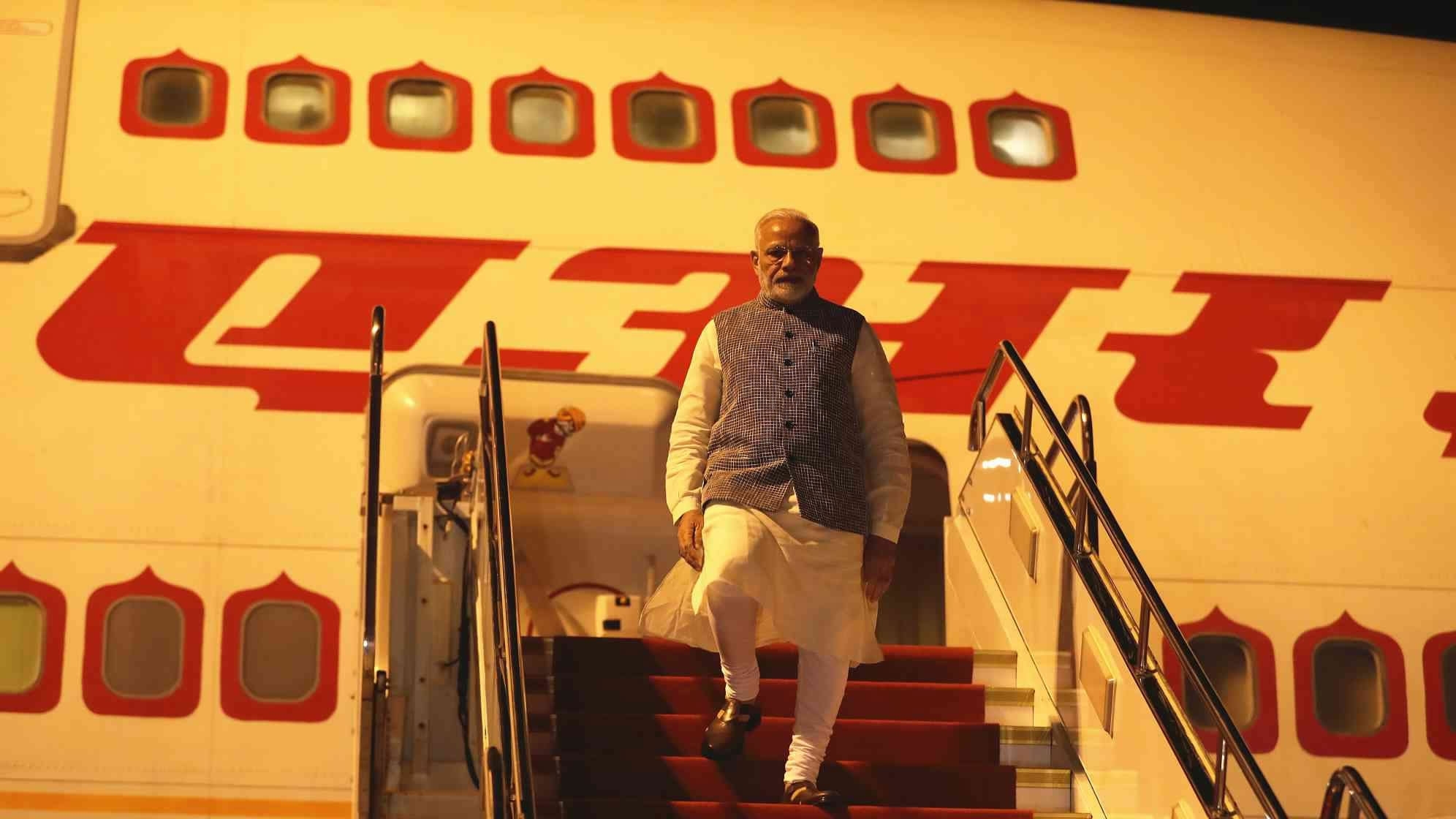
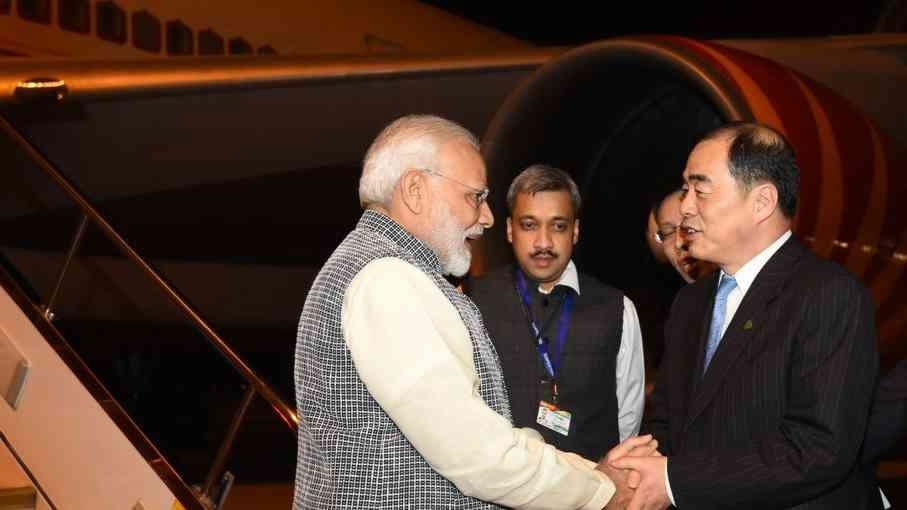
Chinese President Xi Jinping and Indian Prime Minister Narendra Modi began their two-day informal meeting on Friday in Wuhan, the capital city of central China’s Hubei Province.
While the Wuhan summit aims to “reset” bilateral ties that were seriously strained after last year’s Donglang border standoff, the talks appear to have an ambitious long-term strategic dimension that may have a “once-in-a-century” impact on global issues, according to officials from both sides.
The sprawling East Lake Guest House, where both leaders are meeting reportedly without any pre-set agenda, was once Chairman Mao Zedong’s private villa and therefore turns out to be a befitting venue for the meeting that is predicted to deliver a historic outcome.
“The leaders of the two countries will conduct strategic communication on the great changes of the current world that have never been seen in the past hundred years, and exchange in-depth views on the overall, long-term and strategic issues regarding the future development of bilateral relations,” Chinese Foreign Minister Wang Yi said on Monday while announcing the agenda for the Wuhan meeting during a joint press conference with his Indian counterpart Sushma Swaraj.
The Indian Foreign Minister agreed that “as two major countries and large emerging economies, healthy development of India-China relations is important for the emergence of Asian Century,” and stressed that “our commonalities outweigh our differences and that we must build on our convergences, while seeking mutually acceptable resolution of our differences.”
Will there be a 'big' announcement?
01:18
These statements have significantly raised the expectation from the Wuhan summit and even though there’s no formal agenda for the talks or a decision yet to issue a joint statement after the leaders’ meeting, there are obvious signs of a “big” announcement that may even have a global repercussion.
What could be the strategic once-in-a-century global shifts Wang was referring to, or what does the idea of an Asian Century, as cited by Swaraj, entail? Is the leadership of both the sides subtly hinting at a gradual shift in the global order, which has for at least a couple of centuries been dominated by the Western powers?
At a time when the US is blatantly embracing protectionism with President Donald Trump threatening a trade war with China that could trigger a global slide towards uncertainties, could Beijing and New Delhi, as two large emerging economies driving much of the recent global growth, chart out a long-term plan assuring stability?
“If there is any certainty to be found, the relative rise of China and India may well be one of the grand, overarching, long-term shifts. As the world's fastest-growing economies, the states with the oldest civilizations as well as the only two members of the billion-plus population club, China and India are bound to play larger roles both separately and collectively on the global stage,” Mao Keji, a researcher with the Beijing-headquartered public policy thinktank Pangoal Institution, wrote in an opinion piece for the Global Times.
It is anyone’s guess whether Xi and Modi be able to address their pending differences over a range of issues – including India’s trade deficit with China and it’s reservations about the Belt and Road Initiative (BRI) – in the next two days and announce a joint vision with a global perspective.
Rivals or partners?
02:36
While, there’s a popular media narrative that pits China and India as rivals, both the nations have routinely dismissed such conjecture, asserting that they would rather consider each other as partners and focus on the common interests to drive their bilateral relations.
The Asian giants are also cooperating on a range of multilateral forums such as G-20, BRICS and Shanghai Cooperation Organization (SCO) and also coordinating strategies on issues such as climate change and economic collaboration.
This January, delivering the inaugural speech at the World Economic Forum (WEF) annual meeting in Davos, Modi strongly criticized US trade protectionism echoing Xi’s message at the same event last year.
New Delhi’s position at Davos will give hope to Beijing, which may consider a deeper access to the burgeoning middle-class market in India as a way to offset some of the impact from its looming trade war with the US.
Also amid recent reports of several European nations expressing concerns over China’s BRI, it would be a big win if Xi is able to persuade Modi to join the initiative. India has so far stayed away from the ambitious project, particularly due to its concerns over the China-Pakistan Economic Corridor (CPEC), which it claims passes through the disputed region of Kashmir. China had previously offered to change the name of the corridor if India decides to join the BRI, according to media reports.
Analysts have speculated that if India drops its opposition to the BRI and China addresses India’s trade deficit concerns, the two sides can possibly negotiate a groundbreaking trade deal with a potential to create a common market of more than 2.6 billion people.
India, meanwhile is looking for China’s support in New Delhi’s bid to join the elite Nuclear Suppliers’ Group (NSG).
All these matters are likely to come up during the Wuhan meeting.
China, India reclaiming history?
The idea that China and India will be the leading players in an emerging world order is not far-fetched. In fact, both the Asian giants dominated the global economy for much of the last two millennia and, until the late 19th century, each had a bigger global GDP share than the US.
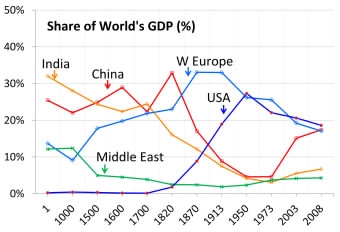
The global contribution to world's GDP by major economies from 1CE to 2008CE according to Angus Maddison's estimates.
The global contribution to world's GDP by major economies from 1CE to 2008CE according to Angus Maddison's estimates.
Before the 18th century, China and India collectively contributed more than half of the global output, according to a study by British economist Angus Maddison. The British economist’s study reveals that in year 1, India’s share was nearly a third of global GDP and China’s was over a quarter – both bigger than the Roman Empire’s. Rome had a huge trade deficit with China, whose silk was worth about its weight in gold.
However, by the mid-19th century, Britain was engaged in the Opium Wars with China in a bid to balance the damaging trade deficit that resulted out of its insatiable demand for imported Chinese silk, tea and ceramics.
The rise of the West led to enormous shifts as they started dominating the global economy by the mid-20th century. Guided by Europe’s Industrial Revolution in the 1700s and spurred by the Western colonial exploitation, the West’s rise directly led to the downfall in India’s and China’s GDP shares between the early 19th and mid-20th centuries.
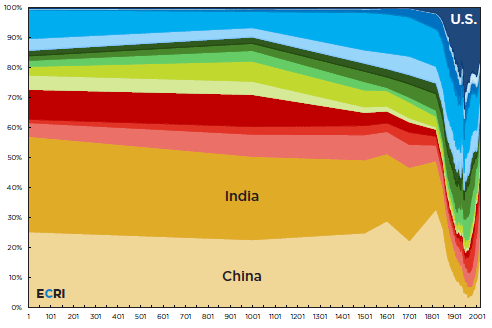
The share of World GDP (%), from year 1 to 2016 /Photo via ECRI
The share of World GDP (%), from year 1 to 2016 /Photo via ECRI
Within just 130 years, from 1820 to 1950, Asia’s (excluding the Middle East) GDP share nosedived from nearly 60 percent to only about 16 percent.
Post World War II, the US commanded over a third of the global GDP for decades while Western Europe’s share hovered around 25 percent, with them jointly accounting for close to 60 percent of the world GDP. When Trump brashly pursues the policy of “Make America Great Again”, he harks back to this period of US dominance.
While the Asian comeback started slowly between 1950 and 1980, it accelerated towards the end of the century as it went past 30 percent of the global GDP. Driven by the phenomenal surge in China’s economic growth in the last couple of decades and a late rush seen in India, Asia lifted its share of global GDP to 43 percent in 2016, which is a 160-year high.
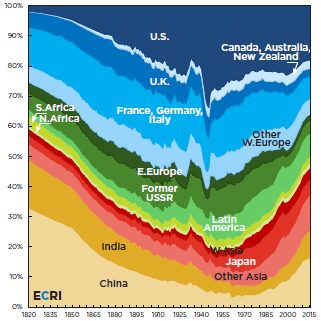
The share of World GDP (%), from the year 1820 to 2016. /Photo via ECRI
The share of World GDP (%), from the year 1820 to 2016. /Photo via ECRI
At the same time, the combined share of the US and Western Europe has dropped to just one-third – a 166-year low. And the US share is now half of its mid-20th-century peak.
China has meanwhile rapidly bridged the technological gap with the West, and is surging ahead in many areas, while India is swiftly catching up. Last October during the 19th CPC National Congress, Xi announced that China is ready to “take center stage in the world”. Experts say India, with more favorable demographics, won’t be far behind.
“Just imagine how the two countries, boasting nearly half of the global economic growth, will gain greater leverage in the world economy if they combine their efforts,” Mao Keji wrote. “Asia's voice will be stronger if India and China speak in one voice,” Modi had earlier said.
[Cover Photo: Chinese President Xi Jinping and Indian Prime Minister Narendra Modi. /Reuters]
1055km