
Middle East
09:01, 17-May-2019
Trump tells aides he does not want war with Iran as Congress presses for answers on Iran arms control report
 ["china"]
Share







Copied
U.S. President Donald Trump has reportedly told its top advisers he does not want to get the United States involved in a war with Iran, as his administration faces mounting pressure from the Congress on answers of Iran arms control report.
Meanwhile in Tokyo for talks with Japanese officials, Iranian Foreign Minister Mohammad Javad Zarif called the U.S. escalation "unacceptable."
There was "no possibility" of negotiations with the United States; he told reporters on Thursday. "I don't know why President Trump is confident."
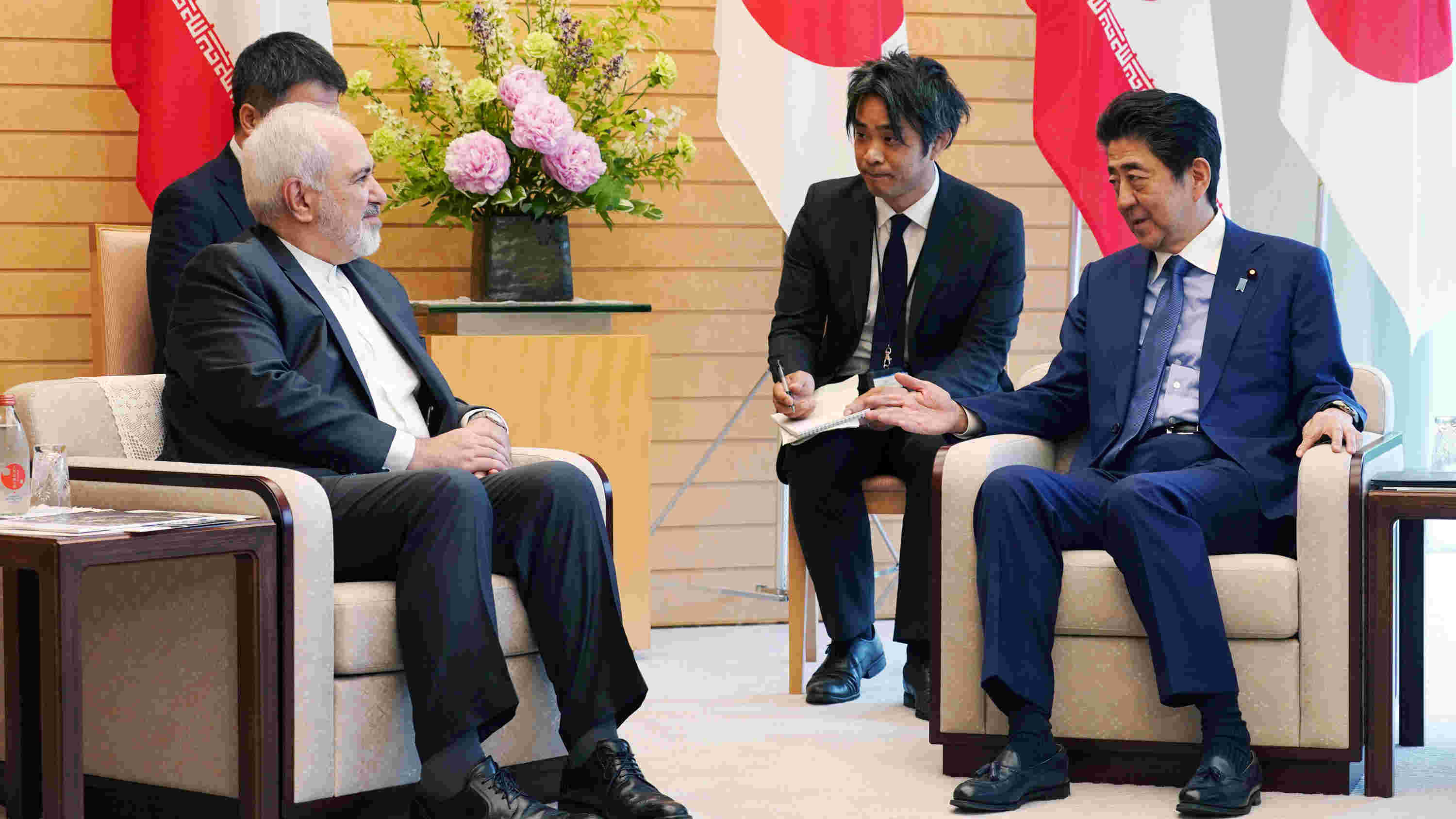
Iranian Foreign Minister Mohammad Javad Zarif (L) meets Japanese Prime Minister Shinzo Abe in Tokyo, Japan, May 16, 2019. /Reuters Photo
Iranian Foreign Minister Mohammad Javad Zarif (L) meets Japanese Prime Minister Shinzo Abe in Tokyo, Japan, May 16, 2019. /Reuters Photo
"We exercise maximum restraint," he said, despite the Trump administration's unilateral move last year to withdraw from the international agreement on Iran's nuclear program.
On Wednesday, Trump predicted Iran would "soon" want to negotiate, even as the State Department ordered the evacuation of most personnel from the U.S. embassy and consulate in Iraq, fearing an attack by Iranian-directed Shiite militias.
"I'm sure that Iran will want to talk soon," the president tweeted.
U.S. officials meanwhile said the deployment of an aircraft carrier strike group and B-52 bombers to the Gulf, one of the world's most strategic waterways, was in reaction to photographs showing that Iran had loaded missiles onto small traditional boats.
Pressure to justify escalation
The White House and Pentagon remained under pressure to demonstrate the reason for the huge buildup in forces and heightened rhetoric of the past 11 days.
On Thursday, the chairmen of three congressional committees on national security on Thursday pressed U.S. Secretary of State Mike Pompeo to explain whether a Trump administration arms control report was politicized and slanted assessments about Iran. The chairmen of Foreign Affairs, Armed Services and Intelligence committees in the U.S. House of Representatives – all Democrats – asked Pompeo in a letter to provide a State Department briefing and documents no later than May 23.
The letter cited a Reuters story from April 17 that reported how the administration's annual report to Congress assessing compliance with arms control agreements provoked a dispute with U.S. intelligence agencies and some State Department officials.
The dissenting officials, sources said, were concerned that the document politicized and skewed assessments against Iran.
"Our nation knows all too well the perils of ignoring and 'cherry-picking' intelligence in foreign policy and national security decisions," the chairmen said in their letter. They referred to the selective use of intelligence "to justify the march to war" in Iraq in 2003.
The letter signed by Chairmen Eliot Engel of the House Foreign Affairs Committee, Adam Smith of Armed Services and Adam Schiff of Intelligence also questioned why the unclassified report was only 12 pages compared to 45 the previous year.
Anti-war Trump?

U.S. President Donald Trump boards Marine One as he departs for travel to New York City from the White House in Washington, U.S., May 16, 2019. /Reuters Photo
U.S. President Donald Trump boards Marine One as he departs for travel to New York City from the White House in Washington, U.S., May 16, 2019. /Reuters Photo
The Trump administration meanwhile appeared divided on how hard of a line to take. The deployment of the USS Abraham Lincoln strike group and the bombers was first announced on May 5 by White House National Security Advisor John Bolton.
The vocal hawk called the move "a clear and unmistakable message to the Iranian regime that any attack on United States interests or on those of our allies will be met with unrelenting force."
Secretary of State Mike Pompeo said days later that while the US does not seek a war with Iran, "if American interests are attacked, we will most certainly respond in an appropriate fashion."
But The New York Times reported that Trump himself was not entirely happy with the talk of war and told acting Secretary of Defense Patrick Shanahan early Thursday that he does not want to a military clash.
Trump directly informed Shanahan that he does not want to see the U.S. go to war with Iran during a briefing on the status of U.S. forces in the Middle East in the White House Situation Room on Wednesday, the New York Times reported, sending a message to hawkish White House aides who have been accused of pushing the U.S. toward conflict.
But Trump on Wednesday sought to tamp down the reports of infighting. He tweeted: The Fake News Washington Post, and even more Fake News New York Times, are writing stories that there is infighting with respect to my strong policy in the Middle East. There is no infighting whatsoever."
"Different opinions are expressed, and I make a decisive and simple decision — it's a very simple process. All sides, views, and policies are covered.”
Trump has tightened economic sanctions on Iran and intensified efforts to contain its power in the Middle East after withdrawing Washington a year ago from a 2015 international nuclear deal with Iran, raising fears among some in Congress about intelligence possibly being misused to lay the groundwork to justify military action.
Under the accord, Tehran curbed its uranium enrichment capacity, a potential pathway to a nuclear bomb, and won sanctions relief in return.
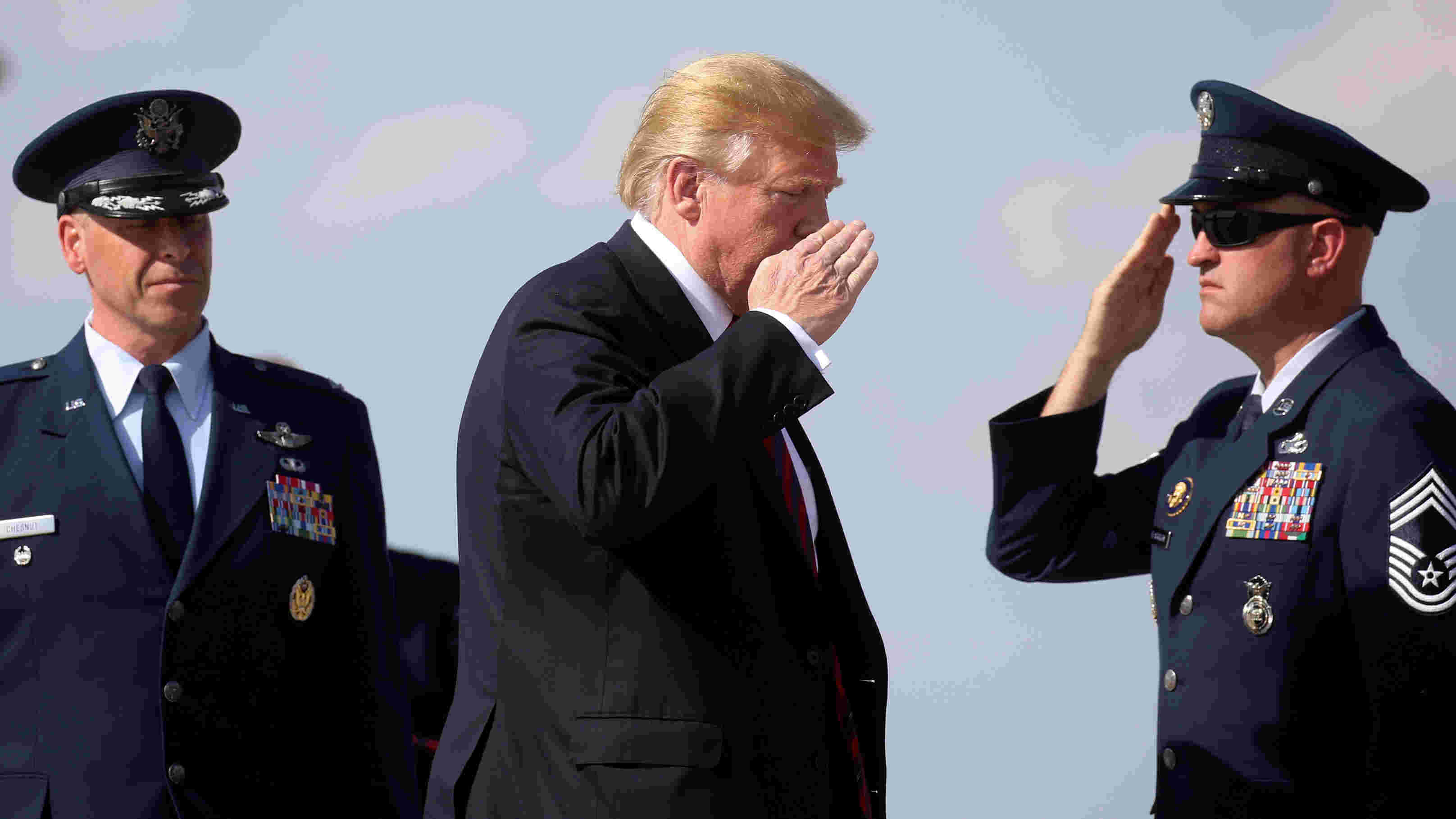
(Cover: U.S. President Donald Trump returns a salute while boarding Air Force One as he departs Washington for travel to New York City from Joint Base Andrews in Maryland, U.S., May 16, 2019. /Reuters Photo)
(With inputs Reuters and AFP)