
A media report in South Korea claims that the US Terminal High Altitude Area Defense (THAAD) system may not be able to function properly in an emergency due to power shortages, severely impairing its effectiveness.
THAAD's powerful X-band radar can detect missiles 1,800 kilometers away but this requires a massive amount of stable electrical power.
The report, published on the Chosun Ilbo website, says that Seoul's decision to delay the deployment of its launchers pending an environmental assessment is also proving problematic.
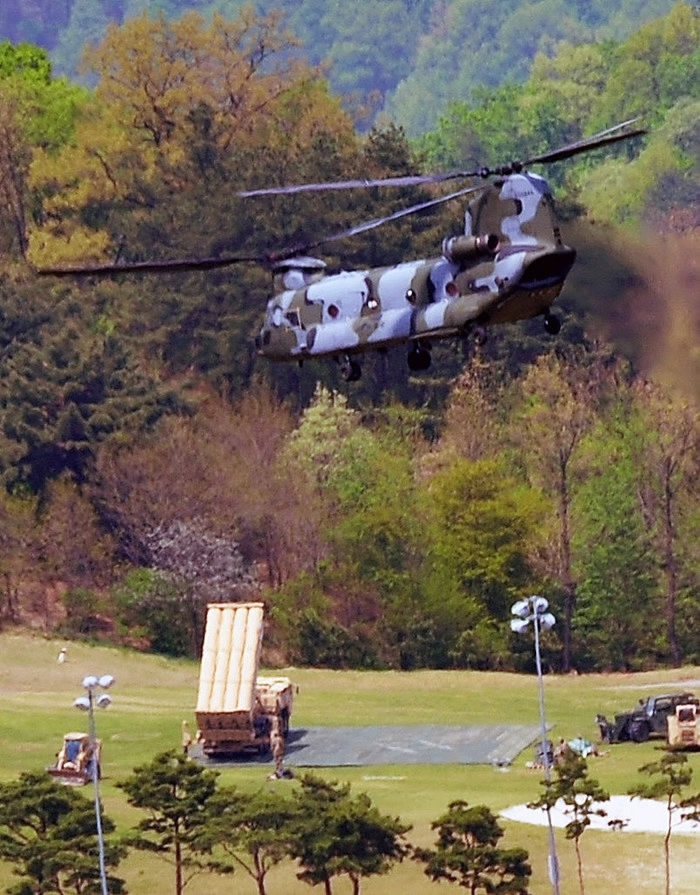
A THAAD interceptor in Seongju, South Korea on April 26, 2017. /VCG Photo
Currently, the two THAAD launchers already deployed in southeastern Seongju county are running on generators due to a lack of power.
The generators, which are intended for use only in case of emergency, consume 340 liters of aviation fuel per hour. With roads leading to the site blocked by protesters, US and South Korean forces have to supply fuel by helicopter.
Without a sufficient power supply, the defense system was "inoperable" when the DPRK test-fired a mid-range ballistic missile last month, the report said.
"Generators do not provide a smooth electrical supply and can lead to malfunctions when used over a long period of time," a source told the Chosun Ilbo website.
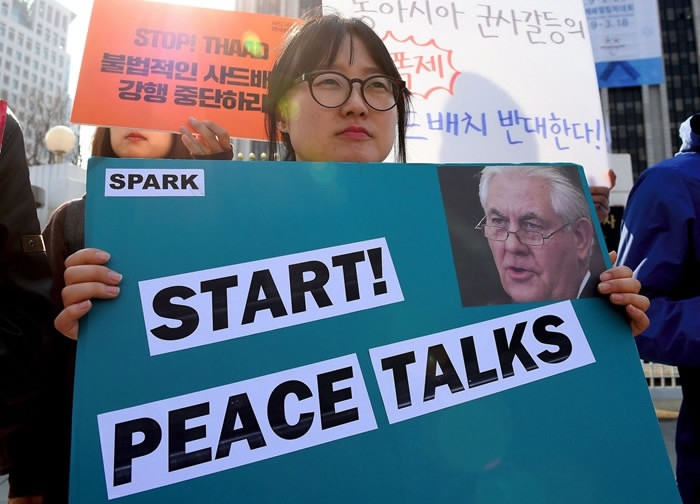
A South Korean activist holds a placard showing a portrait of US Secretary of State Rex Tillerson during a rally against the planned deployment of THAAD in Seoul on March 17, 2017. /VCG Photo
On Thursday, Chinese Foreign Ministry spokeswoman Hua Chunying reiterated China's "firm and clear-cut" opposition to the deployment of THAAD, adding that the system makes no contribution to the resolution of the Korean Peninsula nuclear issue and undermines the regional strategic balance.
Related stories:
S. Korea says THAAD deployment should be suspended