- Home
- China
- World
- Europe
- Politics
- Business
- Opinions
- Tech & Sci
- Culture
- Sports
- Travel
- Nature
- Picture
- Video
- Live
- TV
- Specials


Share






Copied
The Office of the Commissioner of the Chinese Foreign Ministry in the Hong Kong Special Administrative Region (HKSAR) on Monday urged the Foreign Correspondents' Club (FCC) in Hong Kong to stop defaming the implementation of the national security law for the HKSAR under the pretext of freedom of the press.
A spokesperson for the commissioner's office expressed strong dissatisfaction and firm opposition to an FCC statement that groundlessly accused the national security law for the HKSAR and the Hong Kong police's enforcement of the law, and beautified the crimes of Jimmy Lai Chee-ying and others.
The bad apple
All are equal before the law. The media mogul is not an exception.
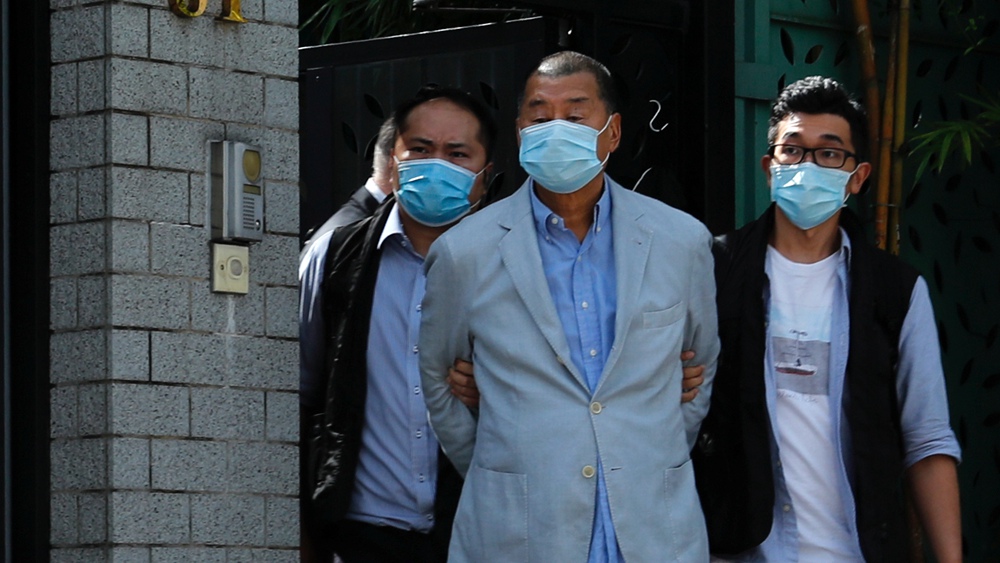
According to Hong Kong police and local media, Jimmy Lai, founder of Apple Daily, and eight others were arrested Monday morning on suspicion of breaching the national security law for the HKSAR.
Local newspaper Apple Daily has played a role in instigating hatred, spreading rumors and smearing Hong Kong authorities and the mainland for years.
It has also played an active role in inciting anti-government riots as it is backed and funded by foreign forces to bring about a "color revolution" in the city, experts said.
Read more: West's inflammatory reports more perilous than Jimmy Lai
No one has privileges above the law, said the spokesperson, adding that Jimmy Lai openly colluded with external forces to carry out activities endangering national security, deliberately undermining Hong Kong's prosperity and stability, and damaging the fundamental interests and well-being of Hong Kong residents, which has hindered the steady and sustained development of "One Country, Two Systems" and the long-term stability of Hong Kong.
The FCC hastily jumped out to exonerate Lai, helping and collaborating with anti-China forces to mess up Hong Kong, the spokesperson added.
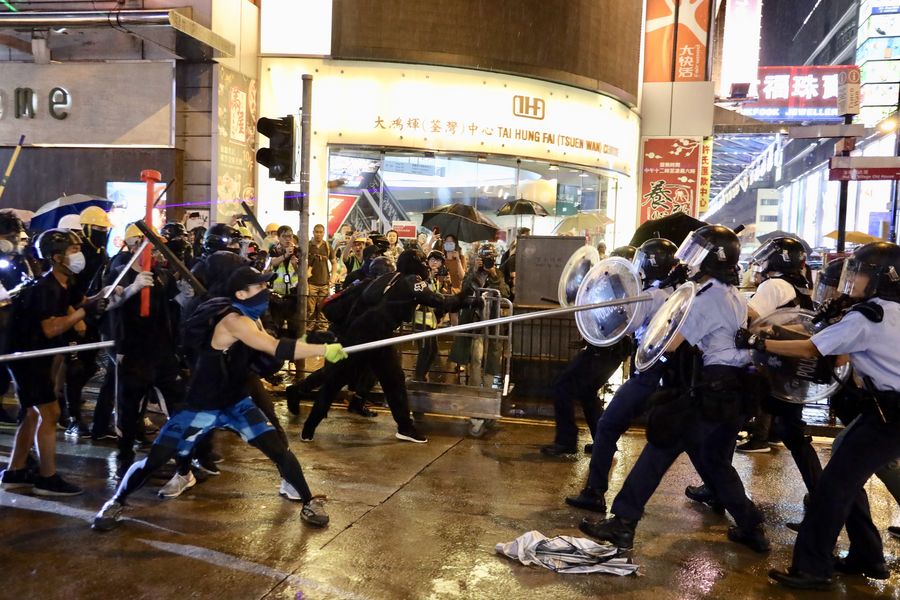
File photo of radical protesters attacking police officers in Tsuen Wan, the western New Territories of south China's Hong Kong. /Xinhua
A safer Asian Pearl
Hong Kong reached a significant turning point on June 30 as the national security law for the HKSAR came into force. Over one month after the promulgation, people in the financial hub "generally feel safer."
During the prolonged social disturbances last year, innocent residents being attacked and metro stations, banks and stores being trashed were common occurrences. A man was set on fire by rioters for criticizing their vandalism, and a senior street cleaner died after being hit on his head with a brick thrown by someone in a mob.
"After the law was promulgated, people generally feel safer as their personal and property safety can be well protected," said Shi Zhu, chairman of the China Culture Foundation.
Read more:
One month in: How national security law for HKSAR has developed
National security law for HKSAR won't affect residents' freedom: Tung Chee-hwa
Besides personal safety, the national security law for the HKSAR also protects Hong Kong residents' rights and freedoms in accordance with law, including freedom of the press.
The FCC has been operating in Hong Kong for nearly 70 years and should know well that freedom of the press in Hong Kong is guaranteed, said the spokesperson.
"At the same time, we should also understand that there has never been an absolute freedom of the press that is above the law in the world. No one should engage in activities that interfere in China's internal affairs and undermine China's national security and HKSAR's stability under the guise of the freedom of the press," the spokesperson said, adding that one must abide by the laws and regulations, including the national security law, in the HKSAR.
The spokesperson stressed that Hong Kong police, in accordance with the national security law for the HKSAR and local laws, have taken actions against instigators of Hong Kong riots and safeguarded national security and Hong Kong's social stability.
"We firmly support the Hong Kong police in strictly enforcing the law and firmly oppose any external interference in Hong Kong affairs. The FCC should respect the facts, recognize right and wrong, and stop denigrating the implementation of the national security law for the HKSAR under the guise of the freedom of the press," the spokesperson said.
Press freedom in HKSAR
The Chinese Foreign Ministry on Tuesday also stressed that there is nothing for anyone or any institution to worry about as long as they don't break the law.
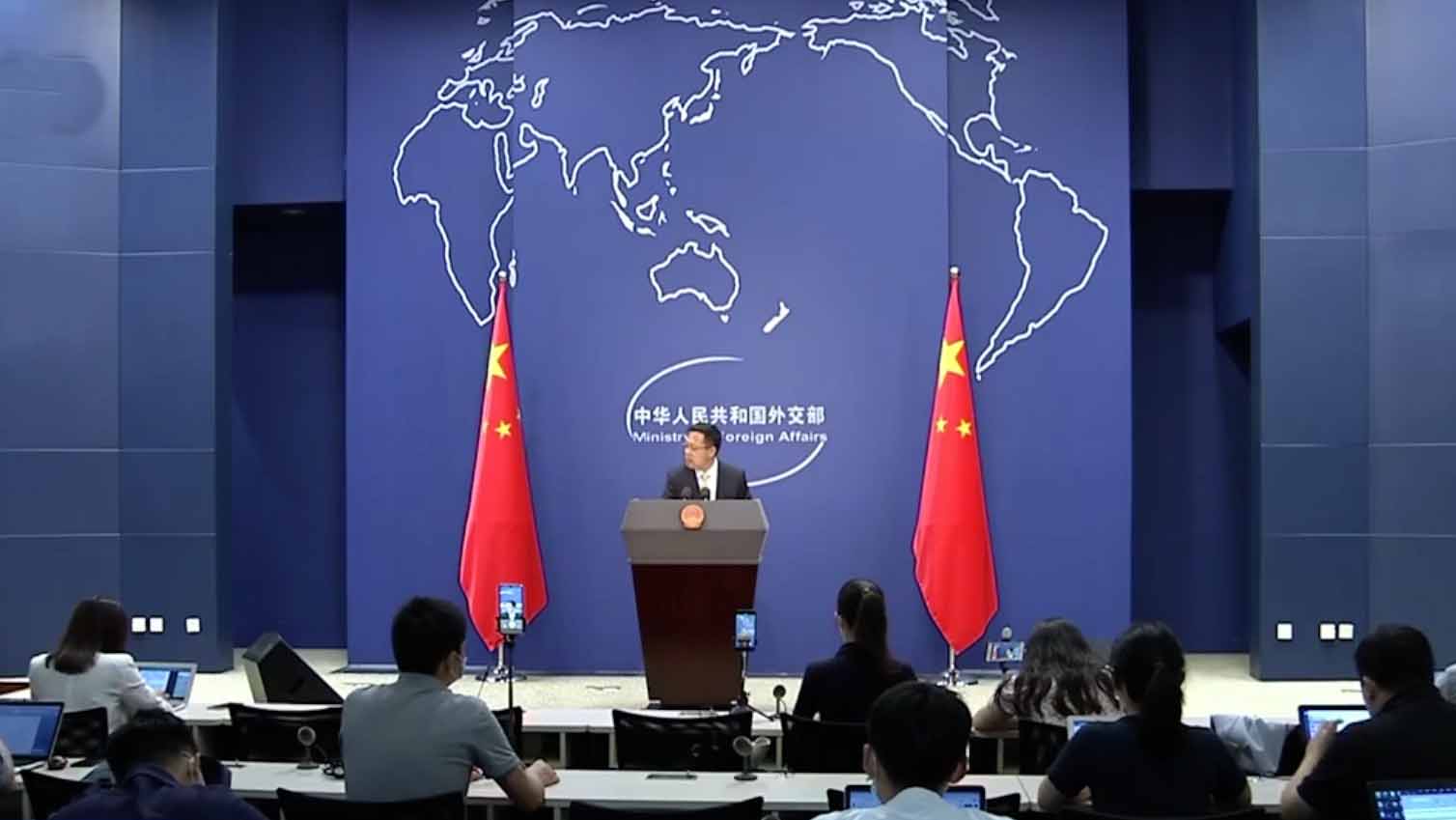
Spokesperson Zhao Lijian made the remarks at a daily press conference when responding to a journalist's question on whether freedom of the press in the HKSAR would be influenced by the implementation of the national security law for the HKSAR.
China is a country with the rule of law and the Hong Kong society also cherishes the rule of law, said the spokesperson, adding that "no one has privileges above the law."
"We fully support HKSAR's law enforcement agencies in performing duties in accordance with the law," he added.
Japanese Chief Cabinet Secretary Yoshihide Suga Tuesday said Japan is deeply concerned by the arrests of Jimmy Lai and others. When asked to comment, Zhao reiterated that Hong Kong affairs are purely China's international affairs and no external interference will be tolerated.
"We urged the Japanese side to have a clear understanding of the reality, know its place and stop meddling in China's internal affairs in any form," he added.
Zhao also dismissed Pompeo's criticism of the arrests, saying there's no factual basis to Pompeo's political lies and China has repeatedly stated its firm position.
"Pompeo has repeatedly made erroneous remarks on Hong Kong-related issues and made irresponsible remarks about China's legitimate actions to safeguard its own national security in accordance with the law."
Chinese Embassy to Britain on Tuesday also expressed grave concerns over and strong opposition to the UK side's irresponsible remarks on the lawful arrest of seven individuals including Jimmy Lai.
The UK Prime Minister's spokesperson and a minister from the Foreign and Commonwealth Office Monday stated that the UK side is "deeply concerned by the arrest of Jimmy Lai and six other individuals," and that freedom of the press in Hong Kong "must be upheld."
The embassy's spokesperson pointed out the national security law for the HKSAR explicitly stipulates that: "The rights and freedoms, including the freedoms of speech, of the press, of publication, of association, of assembly, of procession and of demonstration, which the residents of the Region enjoy under the Basic Law of the Hong Kong Special Administrative Region and the provisions of the International Covenant on Civil and Political Rights and the International Covenant on Economic, Social and Cultural Rights as applied to Hong Kong, shall be protected in accordance with the law."
Meanwhile, every right or freedom has its legal boundaries, the spokesperson said, adding that in exercising rights or freedoms, one must abide by the requirements of law and anyone who crosses the boundaries and limits of the law shall be brought to justice.
"We urged the UK side to immediately stop using freedom of the press as an excuse to discredit the national security law for the Hong Kong SAR, stop supporting anti-China elements seeking to disrupt Hong Kong, and stop interfering in the affairs and judicial independence of the Hong Kong SAR. Interference in China's internal affairs in whatever form is self-defeating," said the spokesperson.
(With input from agencies)
(Cover: File photo of taxis displaying Chinese national flags through Tsim Sha Tsui during a peace rally in Hong Kong, China. /Xinhua)