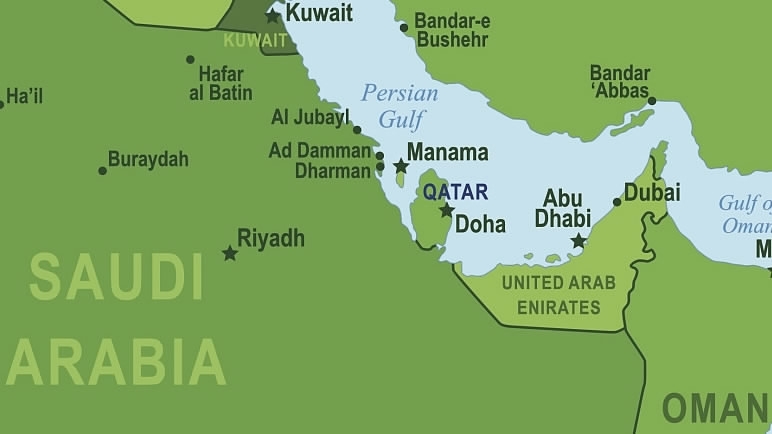
When the summit kicks off on Sunday, the sea, land and air blockade imposed by Saudi Arabia, Egypt, Bahrain and the United Arab Emirates on Qatar will have lasted for over 10 months. The Quartet accuse Qatar of backing their arch-rival Iran and supporting terrorism, which Doha has denied.
The dispute, one of the biggest crises in inter-Arab relations in recent decades, has left US allies in the region fractured. In a telephone call with Saudi King Salman on April 2, US President Donald Trump called for restoration of unity among Arab Gulf states and a united front against Iran.
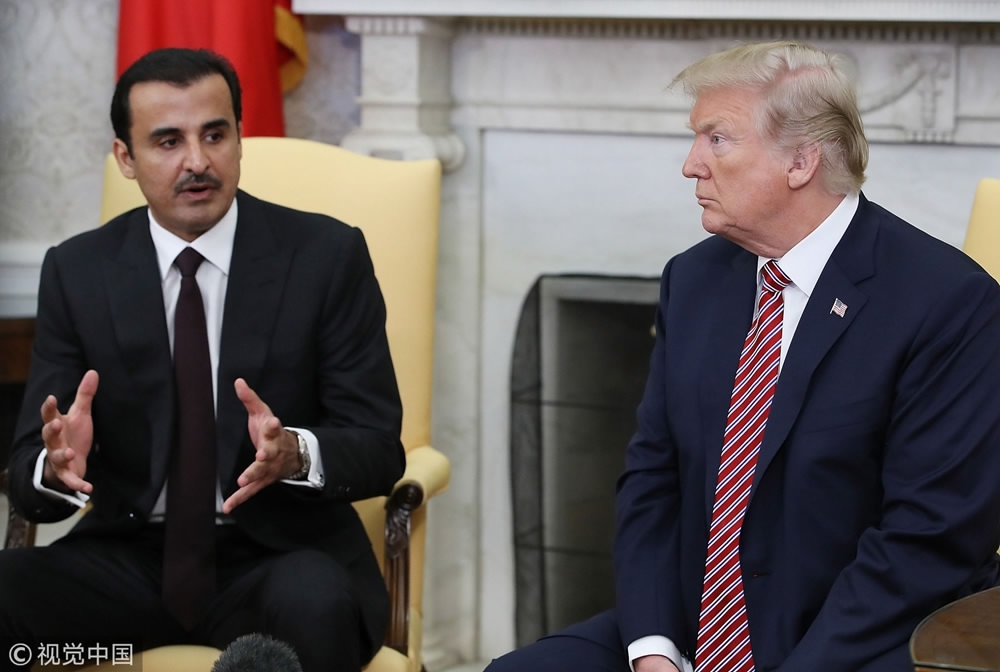
US President Donald Trump (R) listens to the Emir of Qatar Tamim bin Hamad al-Thani at the White House in Washington, April 10, 2018. /VCG Photo
US President Donald Trump (R) listens to the Emir of Qatar Tamim bin Hamad al-Thani at the White House in Washington, April 10, 2018. /VCG Photo
However, there is little sign of rapprochement with the Quartet's insistence on tough terms, Saudi Arabia's plan to further isolate its neighbor, and Bahrain's lashing out at Qatar.
Qatari delegates in Saudi Arabia
Saudi Arabia, Egypt, Bahrain and the UAE collectively severed ties with Qatar on June 5, 2017, but Saudi Arabia still invited the country to attend the summit in its eastern city of Dhahran. This could hardly be seen as an "olive branch" to Qatar, as Arab League regulations require all member states be invited.
Qatar confirmed its participation.
A report by Doha News on April 6 predicted that "there may be some hope of at least a start of reconciliation," given the historical role the Arab League has played.
"After all, the League's prime objective is to draw closer the relations between member states and co-ordinate collaboration between them…" the report added.
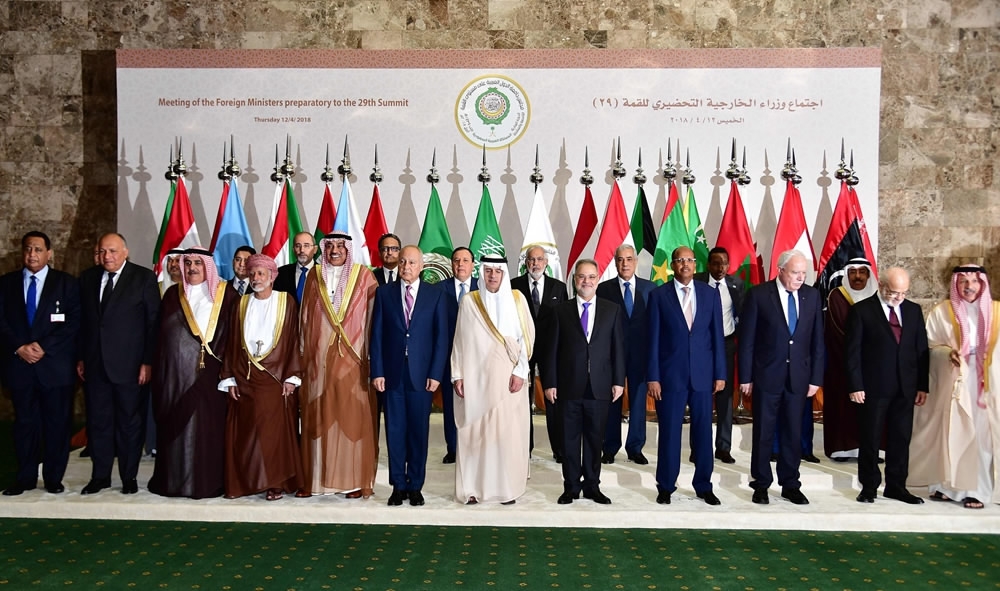
Foreign ministers pose for a group picture during the preparatory meeting of Arab foreign ministers ahead of the Arab League summit in Riyadh, Saudi Arabia, April 12, 2018. /VCG Photo
Foreign ministers pose for a group picture during the preparatory meeting of Arab foreign ministers ahead of the Arab League summit in Riyadh, Saudi Arabia, April 12, 2018. /VCG Photo
However, Saudi Foreign Minister Adel al-Jubeir said on Thursday that the Qatar crisis would not be on the table at the summit.
"The Qatar solution will be within the GCC," or the six-state Gulf Cooperation Council, he told reporters.
'13 demands'
The foreign ministers from Saudi Arabia, Egypt, Bahrain and the UAE held a meeting in Riyadh ahead of the summit, reiterating their position that Qatar must fulfill the "13 demands" that have been put forward for the normalization of ties.
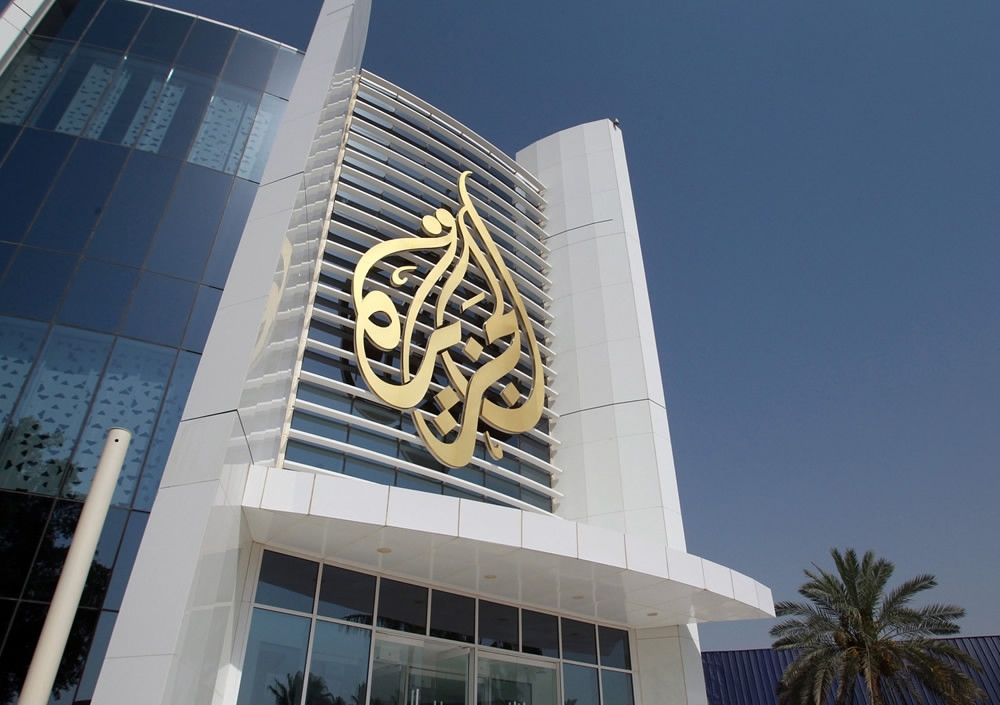
The Al Jazeera Media Network logo on its headquarters building in Doha, Qatar /VCG Photo
The Al Jazeera Media Network logo on its headquarters building in Doha, Qatar /VCG Photo
Last July, the Quartet issued a list of 13 demands to Qatar, urging the country to shut down the Al Jazeera network, close a Turkish military base, scale down ties with Iran, and sever all alleged ties with the Muslim Brotherhood, Hezbollah, al-Qaeda and ISIL.
In a sign of an escalation in the crisis, Saudi Arabia has reportedly planned to dig a canal through the length of its border with Qatar, in a bid to turn the peninsula into an island and further isolate the smaller country.
According to the Saudi-based Sabq online newspaper, the planned "Salwa Canal" will be dug by Egyptian companies, benefiting from the "Egyptian experience" in widening the Suez Canal.
A map of Qatar and its border with Saudi Arabia /CGTN Photo
A map of Qatar and its border with Saudi Arabia /CGTN Photo
Last month, Saudi Crown Prince Mohammed bin Salman bin Abdulaziz told Egyptian media that the dispute was like the 60-year US embargo of Cuba. He also dismissed Qatar as "smaller than a Cairo street."
Bahrain: Qatar has 'no place' at summit
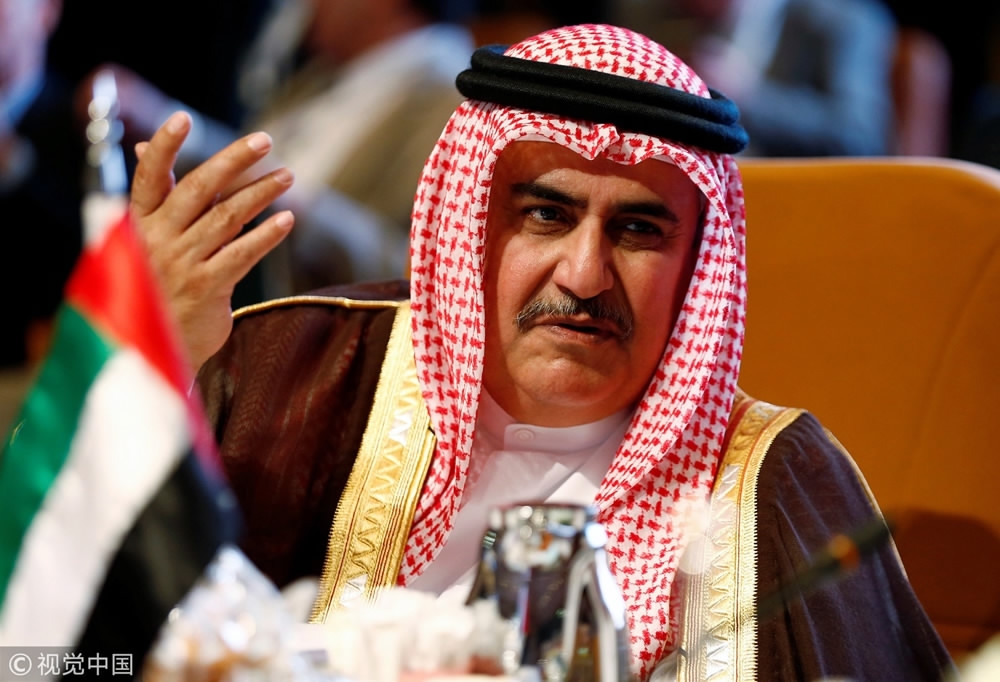
Khalid bin Ahmed al-Khalifa, Bahrain's foreign minister, criticized Qatar's "attacks" on the summit and "abuses" of the Saudi king, saying that Doha should have "no role" in the pan-Arab gathering.
"Qatar's media attacks on the Dhahran summit and its ongoing abuses of the Custodian of the Two Holy Mosques (the Saudi king) confirm that Qatar has no place and no role in the summit and its representation in any way does not serve Arab national security," he tweeted on Friday.
Bahrain's Foreign Minister Khalid bin Ahmed al-Khalifa attends the Arab Foreign Ministers' Meeting in Riyadh, Saudi Arabia, April 12, 2018. /VCG Photo
Bahrain's Foreign Minister Khalid bin Ahmed al-Khalifa attends the Arab Foreign Ministers' Meeting in Riyadh, Saudi Arabia, April 12, 2018. /VCG Photo
As all other Arabs look forward to the event, "only those who sell themselves to the enemies very cheaply would attack the summit," he added.
Qatar has repeatedly said it is committed to dialogue to resolve the prolonged crisis without undermining its "sovereignty and national interests."
Arab leaders attending the summit are expected to focus on issues such as the Syrian conflict, Iran's nuclear deal and the Palestinian-Israeli peace process.
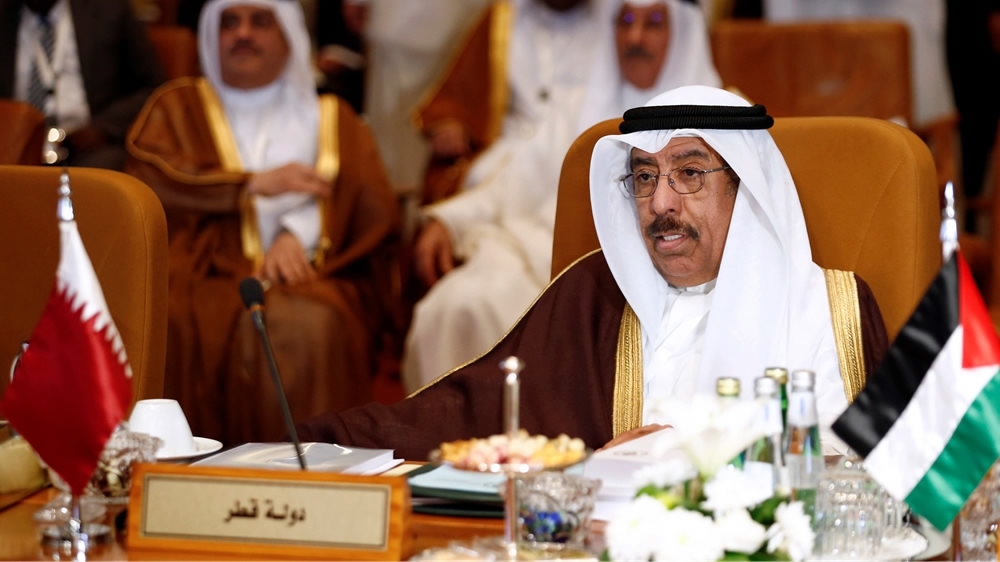
(Top photo: Head of Qatari delegation and Qatar's permanent representative to the Arab League Saif al-Buainain attends the Arab Foreign Ministers' Meeting in Riyadh, Saudi Arabia, April 12, 2018. /Reuters Photo)

 ["china"]